Thomas Lojek
Tom Buchino:
The Importance of Small Unit Tactics
2022
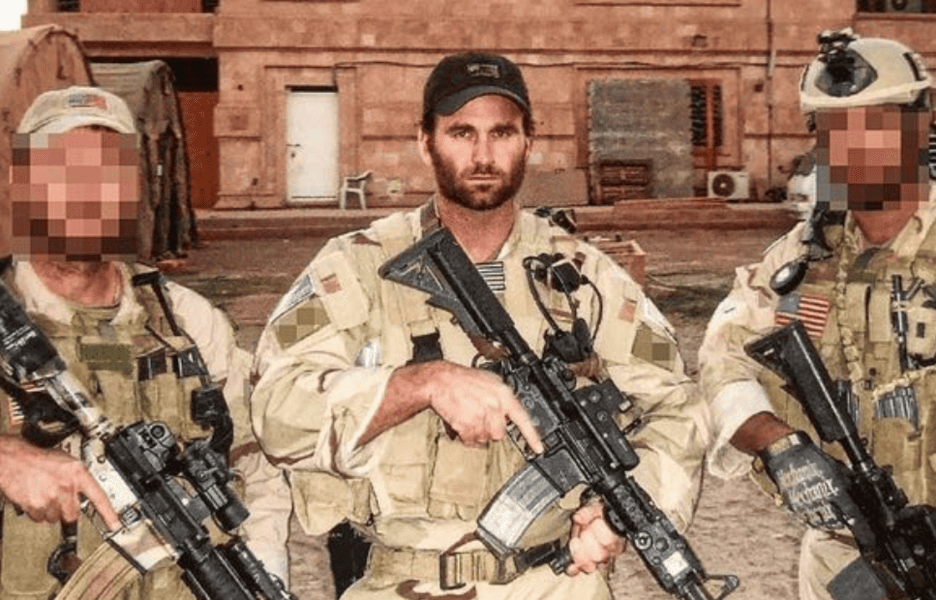
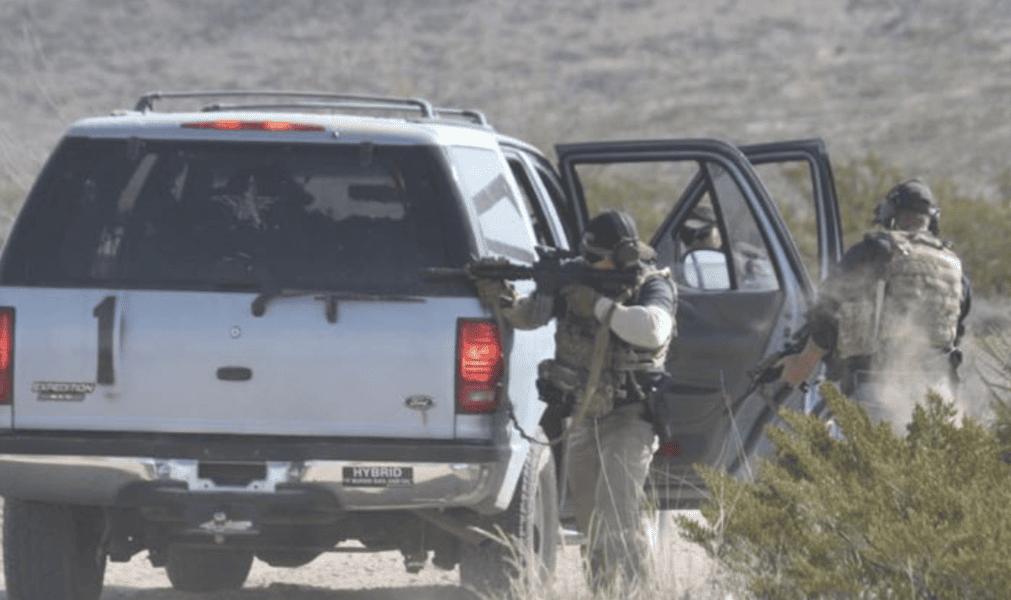
Tom Buchino, Sergeant Major, U.S. Army Special Forces (Ret.), is a decorated combat veteran with worldwide experience, having served in multiple Special Forces Operational Groups, the Special Warfare Center and School, and a Counter-Drug Organization.
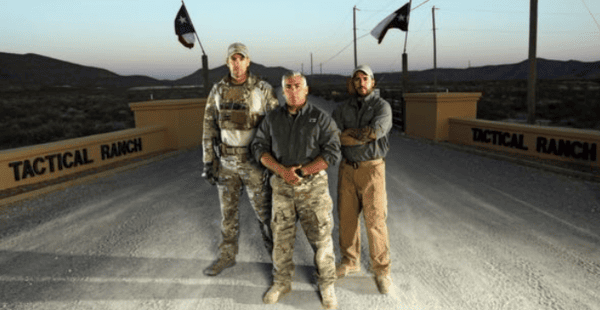
He is the founder and CEO of Covenant Special Projects and Tactical Ranch®.
The Importance of Small Unit Tactics
I’d like to address the importance of Small Unit Tactics (SUT).
I know from firsthand experience in the Special Forces Regiment, most battles are fought and won or lost by the composition of small teams.
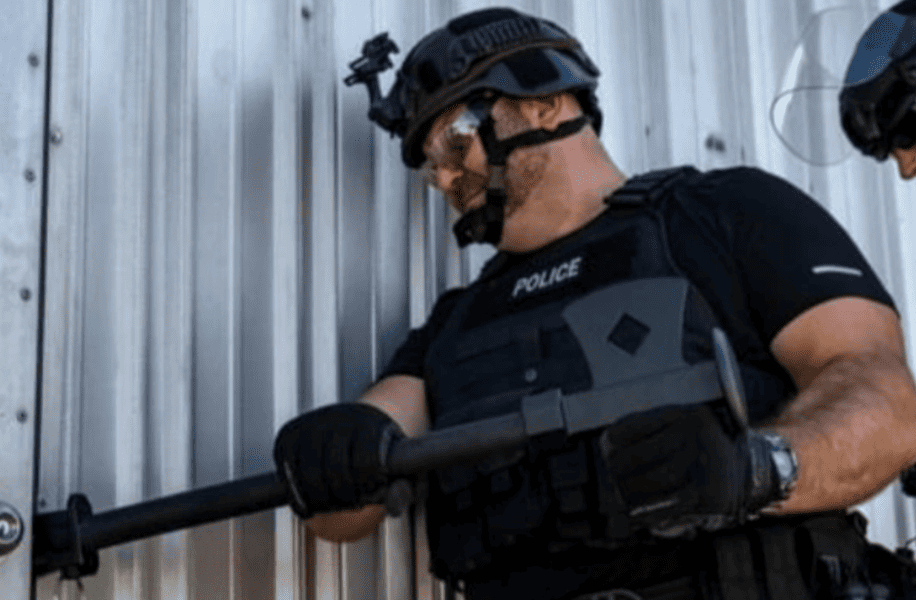
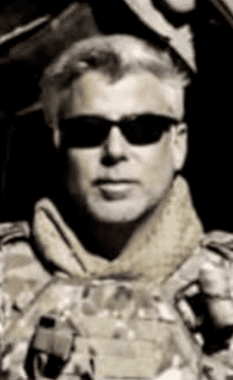
A SEAL Platoon, SF A-Team, light infantry squad, or a few police officers responding to a school shooting fight with limited personnel, limited weapons systems, and limited supporting resources.
Success or failure hinges on factors including individual and collective skills (training and experience) and the immediate ability to operate as a Team, thus Small Unit Tactics.
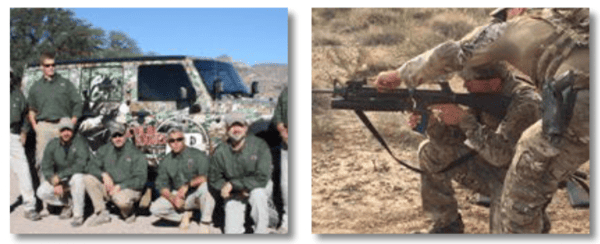
As the owner of Covenant Special Projects Protective Services and our training facility, TACTICAL RANCH®, my instructor cadre and I ensure we stress the importance of proper execution of Small Unit Tactics.
Why Small Unit Tactics Matter
Small Unit Tactics (SUT) encompasses all aspects of individual and collective element tactical competencies as well as the team’s doctrine, policies, procedures (SOPs), and TTPs.
SUT requires mental and physical discipline.
The discipline to execute the trained behavior that best supports fellow teammate efforts and the ground-truth situation.
Small teams rely completely on one another; it’s critical to mission success.
Every operator must do his/her job and not “Be the Lone Wolf,” possibly placing fellow teammates or the mission at risk.
SUT is like a tactical symphony; every instrument or operator has a supporting role.
One rogue violin out of key…
One teammate performing something different from rehearsed SOP…
Well, you get the picture.
The issue with developing robust SUT capabilities in small teams is this: this aspect of training is often overlooked.
It’s much cooler and better for the Spotlight Ranger YouTube posts to simply allocate all training time to individual skills: El-Presidente, Tactical Reloads, etc.
Of course, those of us who carry guns for a living or for defense purposes love to spend time at the range punching holes in paper or banging steel, but all too often we neglect working scenarios involving others (Team Work / SUT).
Building SUT on Doctrine and Fundamentals
Small Unit Tactics…
… because only Rambo can do it alone…
So, let’s break down SUT.
Think of SUT as the combination of everything administrative, historical, and tactical combined in an Action.
An action that is based on a solid foundation of principles and doctrine.
Foundations are the sturdy, never-wavering, always-present blocks that support every structure, every business, and every successful tactical operator and operation.
Foundations (based on doctrine) support fundamentally based execution of an operation.
Now, foundations are seldom in view, often hidden and constructed of messy, not-pleasing-to-the-eye materials, yet when the molecular structure of these elements combines with just the right mixture, the result is nothing less than a Solid Platform for everything else to stand upon.
The implementation of SUT training into group or team training events is critical for mission readiness.
As previously stated, every aspect of individual and collective skills is combined into Small Unit Tactics.
Whether conducting a Dismounted Patrol through an Afghan village, Counter Ambush Immediate Actions while operating a convoy in Syria, or Serving a High-Risk Warrant in Chicago, the immediate action of team members during emerging events must be behavioral and decisive.
In order to truly develop and implement SUT competencies in your small team’s training, you have to first determine your doctrine.
Military and most Law Enforcement elements have published doctrine, but occasionally we work with small teams that have yet to determine what their true mission is, let alone know anything about doctrine.
This deficiency leaves the team with no clue how to train and often leads to confusion in team members’ responses in emerging scenarios, resulting in diminished SUT competency.
Training for the Mission, Not the Range
Think of a part-time police SWAT team in a landlocked, small rural county in the US that wants to spend time training with borrowed boats on a river 150 miles outside their jurisdiction…
Maybe it is fun, and a great tanning opportunity, but what a waste of valuable training time.
It’s not relevant to their assigned directives.
Or that same SWAT team that has not developed a Tactical SOP (TACSOP) concerning Entries; it could be catastrophic should officers not know their individual and supporting officers’ duties and responsibilities during the assault.
I know all this discussion of Doctrine, SOPs, Policy, Procedures, blah, blah, blah is not what gets Tactical Practitioners’ blood pumping.
For many of you, the behavioral response to such is already ingrained in your soul from years of service…
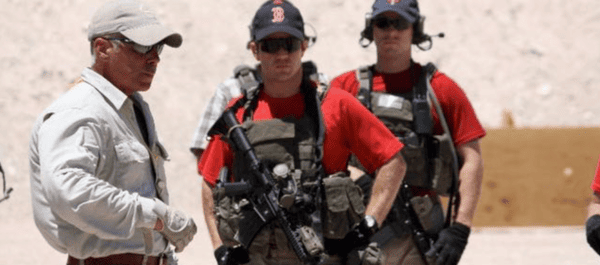
But we, as trainers or unit leaders, have a responsibility to set our folks up for success.
Combat Marksmanship Speed and Accuracy development is quantifiable; immediate results are noted by hits on steel or the tone of a Pro-Timer, but evaluation of SUT requires non-biased evaluation of the team’s performance in a given scenario.
Scenarios must be of tactical relevance (SWAT Team in Boat thing), and each exercise must be followed by a facilitated After Action Review (AAR).
The AAR allows teammates to discuss their actions and supporting team members’ actions from the Planning Phase through Actions On the Objective.
We develop Lessons Learned from the exercise and subsequent AAR, then revise (if necessary), rehearse, and evaluate.
An ongoing process that must evolve with the tactical environment.
Don’t waste time, resources, or energy on tactics or techniques that (a) Will Never Be Authorized by Your Agency / Unit and (b) Are Not a Mission Essential Task.
Stick with what is doctrine!
Doctrine consists of fundamental principles, tactics, techniques and procedures, and terms and symbols.
Most of all, doctrine provides the fundamental principles of what works in battle, based on past experience.
These principles have been learned through combat and conflict, and although not always prescriptive in nature, they are authoritative and always the starting point for addressing new problems.
Such principles are not simply a checklist for what to do in a situation or a constraining set of rules; these principles are designed to promote operator initiative and adaptation to solve problems.
With that in mind, once the team has identified their Mission, the Mission Essential Task List (METL: skills required to fulfill mission directives, Specified and Implied Tasks), accepted or developed and implemented department, agency, or unit policies, procedures, and standard operating procedures, they now have the basis for doctrine.
The team now knows what skills to train, how to develop team operability, and the best course of action for revising and sustaining capabilities.
All of this combined becomes the recipe for SUT development.
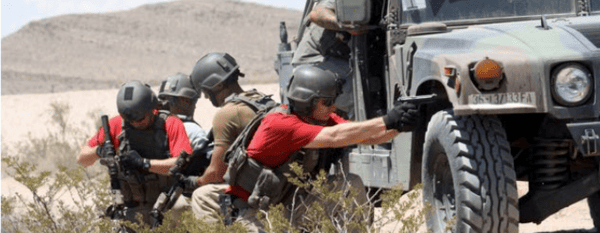
Small Unit Tactics in Practice
My time serving on and leading small teams (Special Forces & Protective Services Teams) has ingrained the importance of SUT.
Knowing the learned behavior and immediate response for myself and teammates in a given situation provides teams the Tactical Advantage when “shit hits the fan.”
When on the “X,” what do we all do to win?
That’s SUT.
SUT is not restricted to Policing and Military Units; it must be trained and employed in any aspect of battle involving two (2) or more operators.
Offensive, defensive, reconnaissance, and stability operations require SUT.
Traveling, Traveling Overwatch, and Bounding Overwatch require SUT.
Get it?
Everything we do in this wonderful world of the fight involves Small Unit Tactics.
A SEAL Team supporting a Marine Task Force may have differing Tactical SOPs (TACSOPs); however, their doctrine is consistent, allowing them to operate in support of each other.
An SF HALO (Military Freefall) Team will have mission-specific aspects to their TACSOP but will integrate perfectly and operate alongside that SEAL Team.
We may differ slightly in composition and capabilities but operate cohesively because of common doctrine and training based on the fundamentals.
Never was this clearer than during a mounted patrol during the initial invasion into Iraq in 2003.
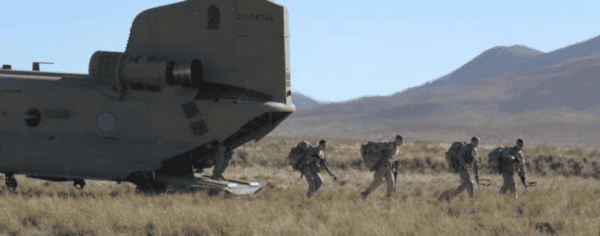
Contact in Iraq: SUT Under Fire
(Unclassified)
Prior to the “Official Kickoff” of the coalition forces’ air campaign, a small group of Special Operations Forces (SOF) conducted an infiltration of Iraq to set up and secure an isolated, abandoned airfield.
The mission was to conduct a clandestine infill of other SOF teams for reconnaissance operations from the secured airfield.
The airfield seizure team consisted of one (1) SF A-Team and one (1) SF B-Team (a small headquarters command and control element) and a handful of Air Force Combat Controllers.
Upon successful occupation and setup of the airfield, the SOF contingent received multiple small teams via prompt delivery from time-staggered, blacked-out MC-130s.
With the successful and undetected infiltration of US SOF operators complete, all were dispatched to different recon sectors, and the Airfield Team was ordered to initiate movement North to Baghdad to get Eyes-On the Baghdad International Airport (the then-called Saddam Intl AP / SIAP).
The small SOF element traveling in GMVs (ground mobility vehicles) and Toyota Tacomas was joined by a Civil Affairs (CA) Section with two (2) HumVs.
The CA section was integrated into the SOF convoy, placing their vehicles between the A-Team leading and B-Team bringing up the rear.
The combined team pushed North in the dark cold, reaching the Euphrates River crossing as the sun began to rise.
A final security halt prior to crossing the bridge provided the team confirmation that aerial intelligence indicated no insurgent presence.
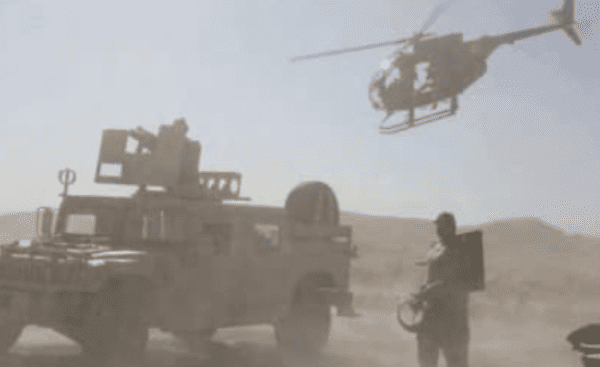
The SOF operators continued to engage targets
As the team made their push over the bridge crossing the Euphrates, with all vehicles now approaching the southern, downward slope of the bridge, the convoy became engulfed in enemy small-arms fire from all directions.
Front, Rear, Left, and Right contact as the Fedayeen had laid in ambush positions covered by buildings and elevated rock walls, awaiting the patrol’s entry into the Kill Zone.
Supporting the Fedayeen’s efforts were multiple RPG teams and Soviet DShK heavy machine guns positioned at multiple roadway intersections.
The US team’s options to Break Contact or Fight Through were made for them when the Assistant Patrol Leader (rear of convoy) identified that there had been a break in contact and one vehicle was no longer positioned in convoy order.
As the SOF operators continued to engage targets with both rifles and mounted machine guns and MK-19 grenade launchers from vehicles (now at much higher speeds), the announcement of the lost vehicle was sounded over the radio.
With the team fighting from their convoy and the ever-expanding distance between the trucks, the trailing Tacomas made a stand at an overwatch intersection and dismounted a couple of operators to recover the lost Civil Affairs vehicle.
All of this came in the midst of a seemingly endless ambush of enemy participants.
Supporting fires allowed the dismounted troops to maneuver and vector the wayward vehicle back into convoy configuration, all while both the SF and Civil Affairs soldiers returned fire on the repositioning enemy forces.
The commander and lead element located an open field to assemble, set up security and defensive positions, and await the trailing arrivals.
Upon arrival of all vehicles, defenses were set as the team prepared for a counterattack.
To this point, the Unit had received no serious casualties.
However, many of the vehicles had suffered multiple non-disabling wounds of their own.
Round two proved to be more intense
Communications with higher (command), reporting the situation, were established while a motivated US Air Force TAC-P (an attached member of the team) dispatched Close Air Support from an A-10 Thunderbolt.
Due to enemy armor positions located to the patrol’s North, the determination to fight back through the ambush site and cross over the Euphrates once again was made, briefed to all teammates, and executed with the firepower of the A-10.
The extended period spent coordinating air support, reporting, and refitting for round two allowed the Fedayeen time to re-form and position for their counter.
Never go through an ambush a second time…
That’s just common sense.
But, when the options are tanks vs. trucks or some buggers in decent positions vs. SOF guys and other American troops with a crap ton of bullets, the answer is a no-brainer.
After positioning the Tacomas in between the heavier HMMVs and ensuring the A-10 inbound run, the detachment began its violent egress through the city back to the river crossing.
Round two proved to be more intense than the previous, but the A-10 showed no mercy, and the US ground element’s speed and fire accuracy were more than the opposing forces anticipated.
As the egressing US forces laid waste to stationary targets, the A-10 spent every grain of its combat load on the hardened positions and one poor bastard on a motorcycle; the team was able to cross the danger zone and egress South, over the bridge spanning the Euphrates, to a secure rally point, all without a serious casualty.
Yes, many of the vehicles looked like Swiss cheese; one even died just after making it to safety, but the team was secure and in the defense.
Live to Fight Another Day!
“One Team One Fight”
This brief overview of a contact in Iraq is not intended to showcase heroes (a word much overused these days) or the lack of perfect intelligence…
It is intended to highlight the importance of Small Unit Tactics.
The US forces involved in this 5-hour battle on a hectic day in a foreign land remained poised against overwhelming odds and destroyed a large number of enemy forces by working together; thinking intuitively, exercising initiative, and taking the fight to the enemy.
Special Forces, Civil Affairs, and US Air Force troops, although serving different units, with differing SOPs and different training and equipment, exercised the principles of Small Unit Tactics to fight.
“One Team One Fight”
Small Unit Tactics is a vital aspect of tactical training.
The combination of everything administrative, historical, and tactical combined in an Action … an Action that is based on a solid foundation of principles and doctrine.
As we face this new decade, global threats and domestic disturbances will require increased vigilance on behalf of the Tactical Practitioner.
ISIS will reemerge, Al-Qaeda will operate its terror, and others wanting to do freedom and good people harm will perpetrate their hate.
The Future brings many unknowns, but I know my guys and I at Tactical Ranch® will continue to stress relevant, mission-specific, realistic tactical training and the importance of developing and/or enhancing SUT capabilities in every group we have the privilege to work with.
“One Team One Fight”
Tom Buchino
Sergeant Major
US Army Special Forces (ret.)
Photo Credits: Tom Buchino