Thomas Lojek
Interview with Jack Carr:
Modern Battlefields and
the Future of Special Operations
2022
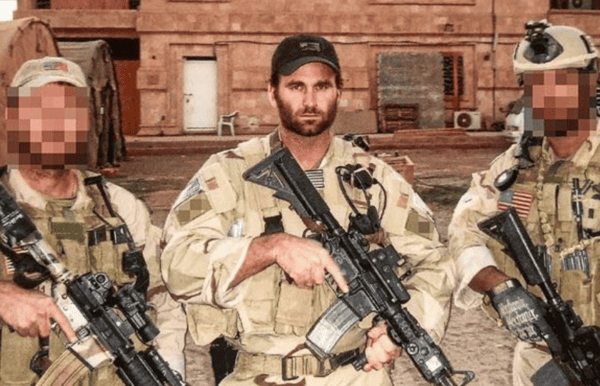
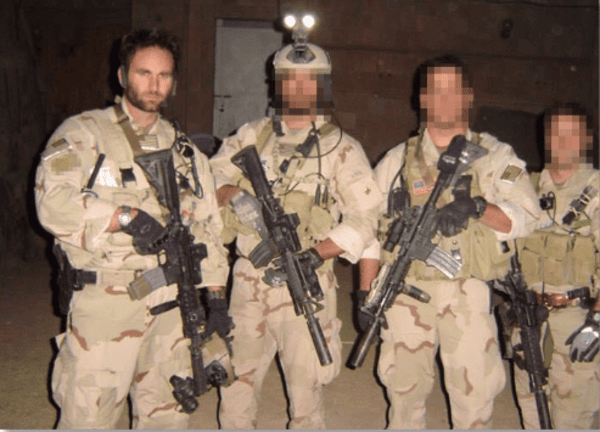
After a long career as a Navy SEAL, author Jack Carr turned to writing thrillers.
Just as he did in his military career, he uses this platform to explore the present and future dangers that we face as a country and as a world.
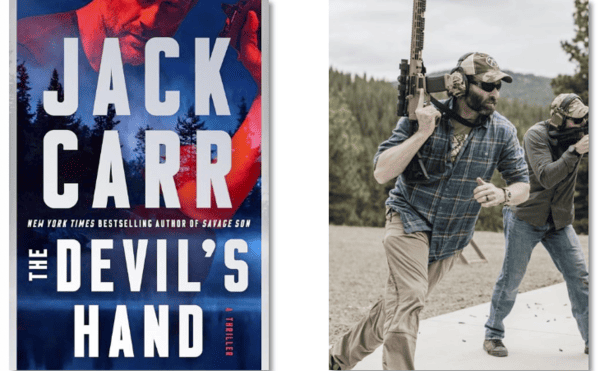
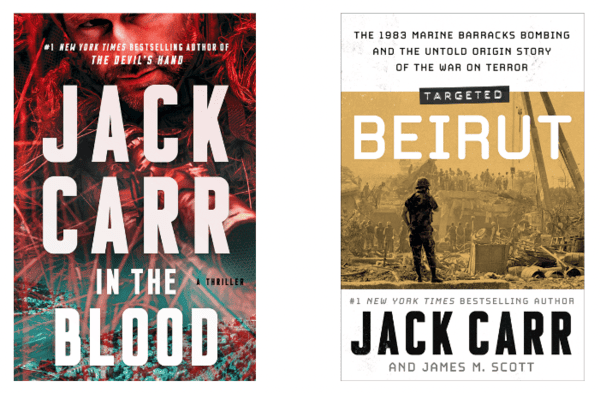
The fourth book in his Terminal List series, The Devil’s Hand, follows former Navy SEAL James Reece on a top CIA mission of retribution.
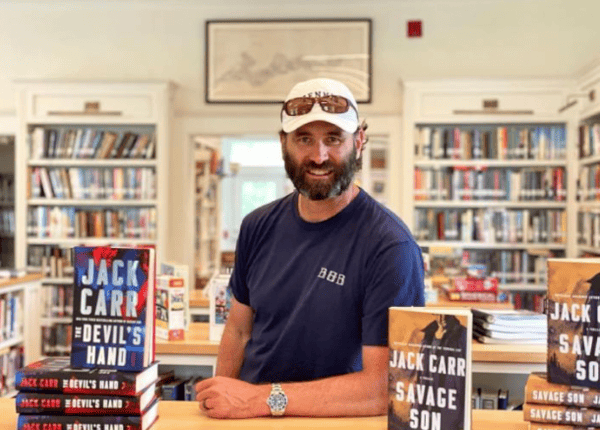
Jack Carr sat down with Thomas Lojek to talk about his new book and about surviving worst-case scenarios.
What Our Enemies Learn From Watching Us
Thomas Lojek: Can you give us a short summary of the idea behind your thriller series “The Terminal List,” featuring protagonist James Reece?
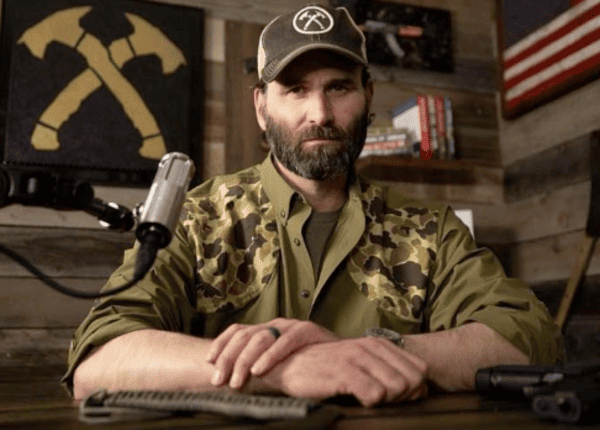
Jack Carr: For my novels, I always ask the question, “What has Iran, China, North Korea, Russia, terrorist organizations, and/or superpowered individuals learned from us over the past twenty years at war and what have they incorporated into their future battle plans?”
We’ve been playing poker in Iraq, Afghanistan, Syria and other hot spots around the world while they have had the benefit of looking at our cards and watching how we play those cards.
What lessons have they learned and how have they applied those lessons to future battleplans?
I thought about those questions as a SEAL, and today, I think about those questions as an author and a citizen.
My latest novels are always centered around those questions.
For example, I outlined “The Devil’s Hand” in August 2019, and I used a bioweapon as a catalyst to move the story forward.
I had no idea that six months later we would be in the middle of a pandemic.
The theme of my novel became a lot more timely than I initially anticipated.
And our enemies were learning during those days of crisis, maybe more than from our actions on foreign battlefields.
They were learning from our response to COVID.
They are learning from the civil unrest that swept our cities over the summer of 2020.
And they are learning from what were extremely contentious political seasons and election cycles thereafter, which highlighted deep divisions within the populace.
The enemy is looking at all these things with more than passing interest.
They are taking notes at every opportunity on how to exploit our domestic conditions for their potential gain in a future confrontation.
Our enemies are combining the lessons they have learned from studying us over the past twenty years at war with the lessons from 2020 to today.
We have given them a lot to work with.
Preparedness, Personal Responsibility, and a Fragile Society
Thomas Lojek: How can we counter these efforts of our enemies to exploit our weakness?
Jack Carr: We have to recognize that society is fragile.
That should be one of our biggest lessons from the 2020 episode and the years that followed.
We have become comfortable assuming that there will always be food in the grocery store, that there will always be somebody at the other end of the line when we call 911 to dispatch police, fire or EMS, and that there will always be someone on duty who will fix a power outage when the lights go out.
Those are luxuries and comforts that have been absent for most of the human experience.
Especially the COVID experience should have taught us a few lessons about personal accountability: that we have a responsibility to ourselves, our loved ones and our communities to be prepared.
That does not mean running around in a constant state of paranoia.
Rather, it means that you need a couple basic skills, a few tools and some forethought and common sense to deal with adversity when things go south.
Whose responsibility is it to protect yourself and your family and to provide for them?
If you remember feeling ill-prepared during the days of the pandemic, then it is time to take action.
Food, water, a water filter, fire extinguishers, ways to make fire, a trauma kit (and training on how to use it), some combination of firearms that you have trained with, perhaps a generator, and a few months of finances set aside will allow you to focus your bandwidth on the problem set at hand, rather than having to allocate that bandwidth on the basics necessary for survival.
The goal is to PREVAIL, not just survive.
And if you have put thought into the basics ahead of time, you can focus on prevailing and not just surviving.
What Do You Carry When Everything Falls Apart?
Thomas Lojek: Let’s talk about an end-of-the-world scenario.
Nuclear war, EMP, civil war, or just the end of civilization as we know it.
It happens overnight.
What will you carry next morning when you step out of the door?
Jack Carr: I am a big fan of choices and luckily, I have a few options these days.
With that being said, I’d probably choose an AR platform because I have spent so much time over the years training with it.
An AR is something I am quite comfortable with.
I have a couple from Bravo Company, Daniel Defense, SIG, and a few others.
Like I said, I’m a fan of choices.
Each rifle needs a light, a sling, and some sort of an optic with back-up irons.
Some of mine are set up with Aimpoint Micros and others with Nightforce or Leupold glass.
It would be nice to have a suppressor, too.
I have a few inbound from Dead Air Silencers.
Beyond the Gun: Building a Broader Skillset
Thomas Lojek: Do you think in a world of cyberattacks, pandemics, information wars, it still makes sense to spend a lot of time, money, and energy on shooting training?
Shouldn’t we start to diversify and move time and money into other skills, like survival, medic, chemistry, maybe coding, hunting… skills that will help you to survive a bioweapon attack instead of a shootout?
Jack Carr: Shooting is a fundamental skill.
You have to know how to shoot effectively, as competency with a firearm can be used both to defend your family and provide food.
But you are right.
That is just one skillset.
Survival skills, medical skills, mobility skills, fitness—all these are important.
I am quite fortunate that Mike Glover’s Fieldcraft Survival is located right down the road from me.
They offer courses in all these different disciplines.
In courses with Fieldcraft Survival, Thunder Ranch or SIG Academy, you will meet interesting people and make new friends.
I always learn something new from people in these courses as they draw citizens who have recognized the importance of building up skillsets that allow them to be more self-reliant, that put them in the asset category rather than the liability category.
You want to be an asset to your family, your community and your country, not a liability.
Does Special Operations Still Matter in the Age of AI?
Thomas Lojek: In the world of AI, cyberwarfare, bioweapons, information wars, drones… What role will Special Operations have in this world?
Will it still be justified to spend millions of dollars to create and train highly specialized soldiers when troll farms and hackers can burn a city literally down with a few kilobytes of false information?
Jack Carr: We have to take the lessons from the past and apply them going forward.
That’s called wisdom, something in which we are often deficient as we tend to think in terms of four-year election cycles.
We certainly need to devote considerable efforts and energies on building up a force focused on cyberwarfare, drones, AI, and the connected emerging threats in that space.
But I think you will always need those special operators standing ready to go downrange at the tip of the spear.
Unconventional warfare, special reconnaissance, direct action, foreign internal defense, counter terrorism, counter proliferation of weapons of mass destruction, hostage rescue…
… these missions will always need the special operator—constantly training, continually honing the edge, always ready for the call:
“Break glass in case of war.”
Photo Credits: Jack Carr