Thomas Lojek
Mark Human:
The Truth About
Weapon Access and Retention
2022
Mark Human is Director of Training: Multidimensional Warriors, South Africa.
Mark has been a paid trainer for various South African Military, National and Provincial law enforcement departments, private law enforcement, security companies, and local nature conservation team members.
His focus is on CQB, Specialized segments of HRT and “anormal” scenarios – to complement existing sound practices and skills.
When Recognition Comes Too Late
02h00 my WhatsApp message pinged.
As I woke, I felt for my phone next to the bed and mumbled to my wife, “I hope they haven’t started rioting again.”
A message from an armed reaction officer who works for one of my clients we provide training for came up on the screen.
It was worse than the message I expected.
It read, “Hi Mark, I have just found a reaction officer from one of the other companies stabbed to death next to his vehicle on Main Road.
His firearm is missing; we found one casing, so we think he got a shot off.”
Since returning to South Africa in 1998, we have become accustomed to news of law enforcement and security officers being disarmed and killed with and for their firearms.
Dealing with these scenarios quickly became a priority focus and, I dare say, an obsession.
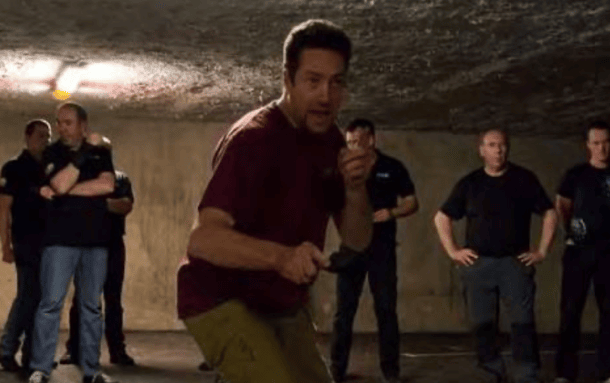
Threat Recognition: Seeing the Attack Develop
Over the years, we have adjusted and refined how we teach and deal with these scenarios.
We have learned many lessons over the last 25 years – below we highlight a few that have been key to maintaining the edge against the bad guys.
Good combative concepts and most self-defence or personal protection programs emphasize and talk about threat precursors.
Fast is good, early is better – the later you see things, the faster you have to be.
We break these down into 4 categories…
…just an overview and by no means a breakdown of curriculum contents…
Situational recognition skills emphasise specific scenarios or areas, such as responding to a panic alarm, approaching possible suspects or choke points while driving an escort.
Autonomic recognition skills mean recognising pre-fight indicators such as posturing, grooming and verbal tells.
Mechanical recognition skills are deliberate actions that indicate weapon access or concealment just prior to an actual attack.
Telling people to watch the hands is simply not enough.
These skills need to be specific, such as an elbow cock indicating access along the waistline.
In-fight recognition skills are physical reference points during the actual confrontation.
An example of this is a blade-wielding opponent utilising their cheek hand (non-weapon hand) as a measure for distance, distraction or grabbing.
Recognising changes in range is key to linking and adapting skills and tactics to successfully counter attacks.
Frameworks for distance management are great tools, but it needs to be emphasised that, in practice, they are fluid and not written in stone.
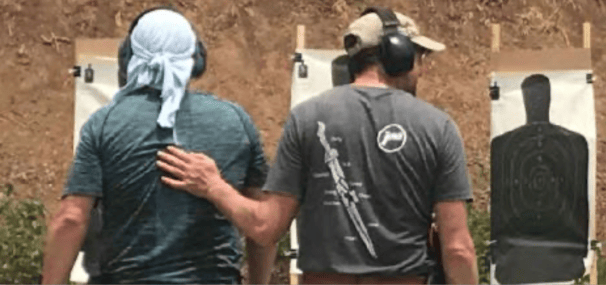
Distance, Timing and Weapon Access
Even with the initial engagement starting outside physical contact range, a committed opponent can close range surprisingly quickly.
With early recognition, we are able to link actions to deny contact and allow us the opportunity to access our handguns.
Frameworks can be expanded and compressed like a concertina depending on variables such as pressure, time of recognition, environment, method of attack, mandate…
For this article, we will keep it simple and break down access vs. edged weapon and life-threatening empty-hand attacks.
7 Meters and more with early recognition:
Stand and deliver or lateral move, draw, base and fire.
3.5 to 7 meters with early recognition:
Lateral movement, either movement draw and shoot while moving.
In some cases, this may mean moving offline in an offline backward arcing trajectory.
0-3 to 5 Meters:
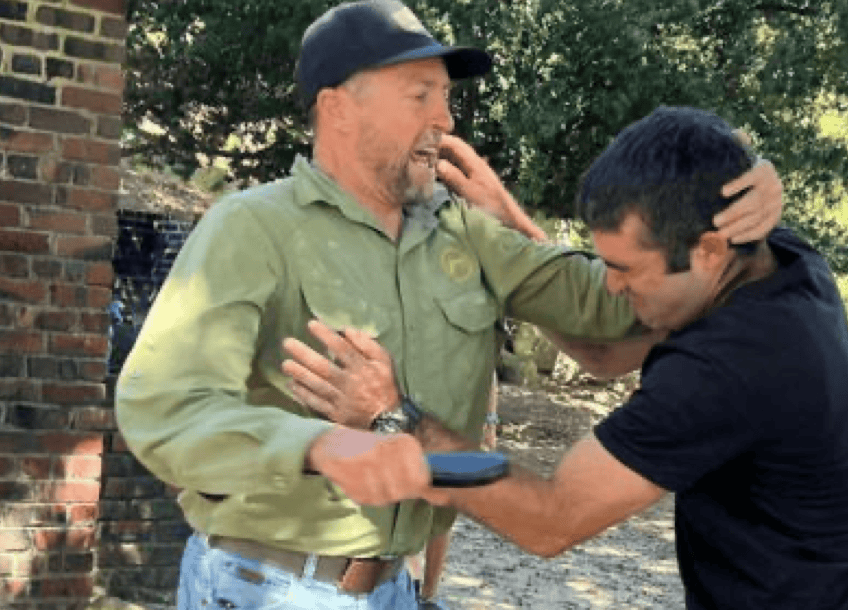
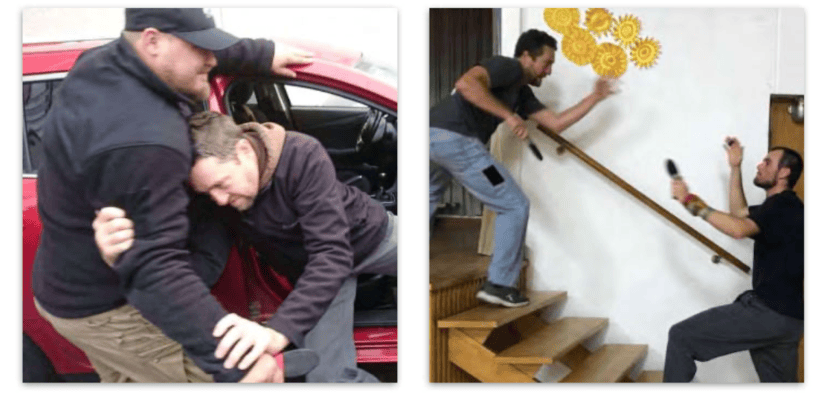
This range requires empty-hand skills to deal with the attack and draw or create the time and positioning to access your weapon.
It is easy to get fixated on your weapon access and get struck, grabbed or stabbed if you ignore the incoming attack.
We use a simple acronym to help embed reflexes to deal with these situations and avoid initial fixation on weapon access in these scenarios.
Deal with the attack.
Disrupt the attacker.
Deploy your weapon.
Training for the Real World
It is obvious that two different skill sets are required to have a positive outcome.
It is obvious that both these scenarios require different solutions.
Our job as trainers is to understand and articulate changes in pressure and link a range of embedded options to be able to adapt and triumph under stress.
From a training provider perspective, this means a little more than watching YouTube (a useful resource)…
…but actually spending a percentage of your time in the field with clients to understand their mandate, daily grind and the threats they face.
Training for the Real World
It is obvious that two different skill sets are required to have a positive outcome.
It is obvious that both these scenarios require different solutions.
Our job as trainers is to understand and articulate changes in pressure and link a range of embedded options to be able to adapt and triumph under stress.
From a training provider perspective, this means a little more than watching YouTube (a useful resource)…
…but actually spending a percentage of your time in the field with clients to understand their mandate, daily grind and the threats they face.
Combat Sports: Good and bad
Combat sports provide excellent conditioning and attributes but need to be adapted to be congruent with the mentality, intent and skills required to be effective against challenges faced in the field.
It is not uncommon to face a criminal with poor fighting skills in the traditional sense of the word but armed with street smarts and killing experience.
“They are not bound by your social values, and no one told them, ‘Don’t bring a knife or screwdriver to a gunfight.’”
…but actually spending a percentage of your time in the field with clients to understand their mandate, daily grind and the threats they face.
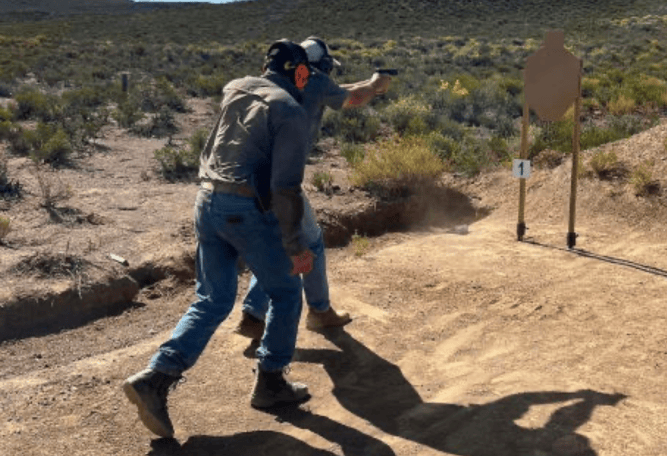
Adapt your gun handling and targeting mindset
Simply carrying a firearm does not relate to success – it is critical to combat mindset complacency and a false sense of security just because you have a sidearm strapped to your belt.
Contact range shooting means you will draw and possibly fire one-handed, often with your non-gun hand forward of your muzzle to defend against edged weapon attacks or grabs (please do not tell me there is no reason not to have both hands on your handgun while you are getting stabbed in the face).
These situations often require adapted draw strokes and shooting from “modern non-traditional” firing positions.
Centre-of-mass shots are not always available, and adapted targeting should be practised during training.
If contact range access and retention are a recognised priority for officers, skills to deal with these challenges need to be structured to teach mindset, in-fight recognition, physical skills, expanded targeting and adapted firearm safety.
Form follows function – adapt accordingly.
Stay safe out there!
Photo Credits: Mark Human