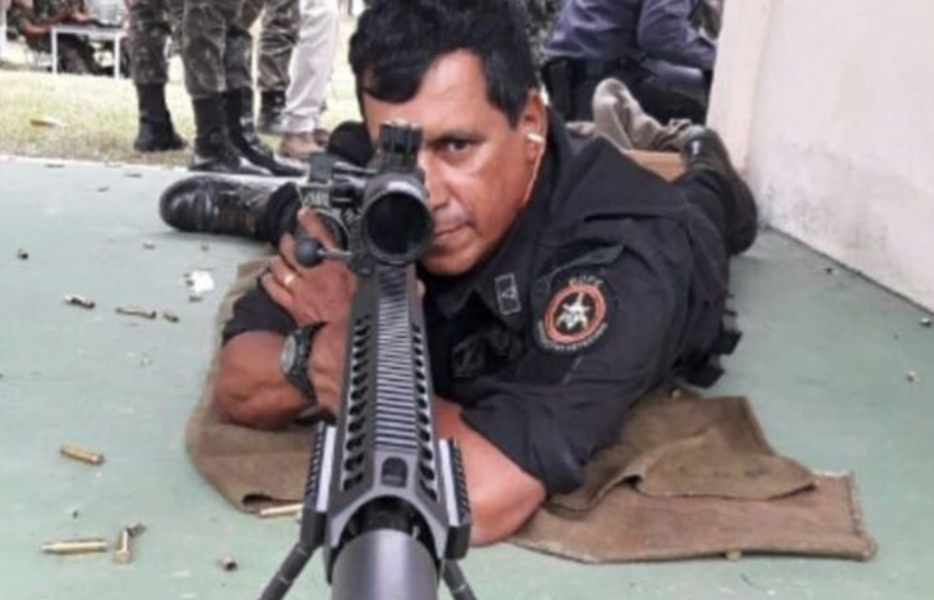
Thomas Lojek
Daniel Rocca Interview:
What Makes a Great BOPE Operator?
2022
Daniel Rocca
BOPE 2nd Lt. (Retired)
Sniper Instructor
BOPE’s selection challenges a potential operator in many ways
Thomas Lojek: What makes a good BOPE Operator?
Daniel Rocca: BOPE is a greatly renowned unit.
We are lethal and highly trained to act in the worst scenarios.
We are a Brotherhood.
That’s how we define ourselves.
Embracing adversity is deeply intertwined at BOPE as an integral part of the culture of our unit.
And for one reason: We face extreme violence every day.
I was shot three times and lost many brothers along the way.
Understanding this, you will also understand how we see hopefuls who want to become part of that culture and BOPE.
We are looking for men with a very strong mind.
Of course, BOPE’s selection course challenges a potential operator in many ways, physically and psychologically.
But the psychological part is the main part, because if you are psychologically weak, later you will not be able to handle your own training to become a BOPE operator.
Our training prepares aspiring operators for the most extreme violent situations you can imagine.
We insert the worst scenarios and challenges in our selection process, because we know from experience how extreme the violence and how exhausting the missions later in the Brazilian favelas will be for those who want to be part of BOPE.
That’s why we start out the right way by putting them under enormous pressure to see how they handle it.
In the selection part of BOPE, we focus on the psychological ability of a future operator to withstand extreme conditions.
We want to see if he remains calm in extremely stressful situations.
Otherwise, the operator will later be unable to psychologically overcome the violence we have to face in the high-crime environment of a Brazilian favela.
That is why adversity, perseverance and honor are part of the culture of our unit.
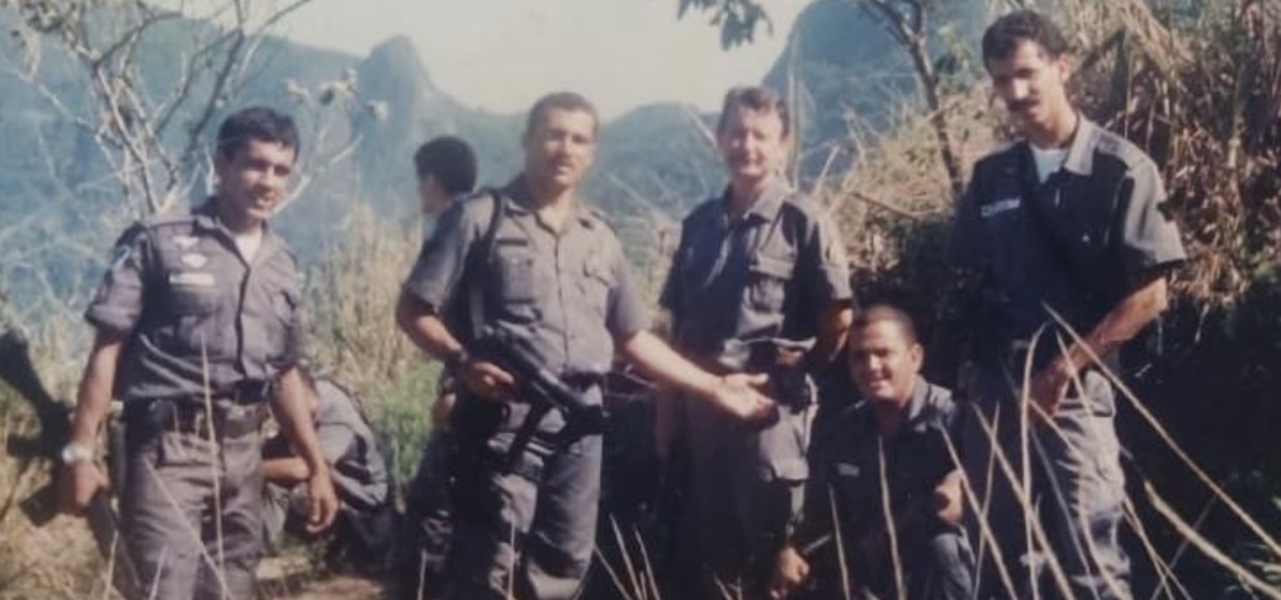
This fearlessness to go through whatever it takes
Thomas Lojek: This ability to withstand highly dangerous and violent missions, missions undertaken under extremely stressful conditions …
… do you think it is something that can be learned over the years with training and experience?
Or are BOPE operators born this way?
Daniel Rocca: The person who chooses to become a BOPE operator is a good man who chooses to face evil and protect law-abiding citizens, even by sacrificing his own life.
We choose to do this.
None of us is born violent!
What happens during the selection course is that the aspirants give themselves in body and soul, bringing their warrior’s heart to us.
Day by day, we put them through the hardest tests.
We separate those who have it from those who don’t fit the profile.
This is what really happens in our selection course and later in our training.
Look, you can’t go into an operation against drug cartels in a Brazilian slum in search of peace, because you will not find peace.
On the contrary, you’ll face dozens of drug dealers armed with HKG3, AR10, AK 47, .50 Cals and grenades.
No one is willing to make peace.
It’ll either be us or them.
Therefore, our operators must have this courage.
They have to have controlled aggression and emotional control.
They have to have this fearlessness to go through whatever it takes and carry out the mission without hesitation.
We have to accept this difficult and adverse lifestyle of our unit as the responsibility that BOPE was created for.
It is what we are.
We have to accept the extreme adversity from the environment in which we conduct our operations.
Our operators are true warriors.
They accept adversity as part of their lives, as the core value of our unit and as the reality of our operations.
A guy who can bring that spirit into our unit will be one of us.
BOPE and technology: We are always testing what fits in our tactical portfolio
Thomas Lojek: Technology is a big topic worldwide and, of course, within all Special Operations Forces.
Does modern technology change the way BOPE operates in missions and the complex battle environment of the Brazilian favelas?
Daniel Rocca: Of course, technology plays a big role today.
Also for BOPE.
But it has always been like that, ever since BOPE’s early days and on both sides.
Both on our side and on our enemies’ side.
Drug cartels are highly adaptable and creative criminal organizations.
For example, the effect of technology on our missions began more than 25 years ago.
When the first cheap commercial cameras became available, drug cartels began placing them in all slums to know where and when the police would enter the community.
And very early on, our enemies started using walkie-talkies, phones, then cell phones and, of course, today smartphones to coordinate attacks.
And, of course, BOPE is going into drone technology as well.
Drones have become part of our surveillance and intelligence operations to obtain information from the battlefield, just like anywhere else and in most special operations forces.
It is just a logical step in the information age.
BOPE adapts and uses new technologies and we are always testing what fits in our tactical portfolio.
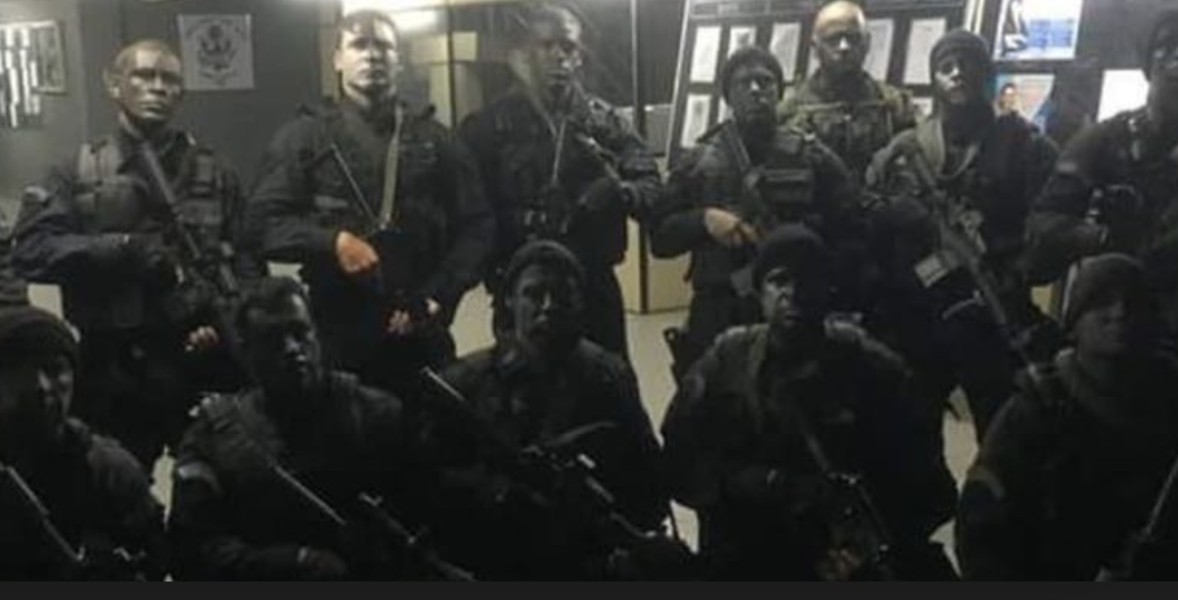
The position of our snipers and patrol units on the streets is unique
Thomas Lojek: What do you think other units could learn from BOPE?
Daniel Rocca: Our operational terrain is very special.
Brazilian slums are uniquely complex and challenging environments for carrying out missions against drug trafficking.
Our teamwork and how we use the terrain to our tactical advantage are unique.
I would accept this if other units asked me what they could learn from BOPE.
We use many combat techniques that include the terrain.
And we do it in a very specific way.
Of course, I cannot go into details.
But we learned very sophisticated ways to include the terrain in our missions.
We included the terrain to take advantage of the element of surprise during the initial phase of the mission and from there we will quickly establish a leadership position in the combat dynamics with the initiative.
The operational and tactical procedures for how we do this are very unique, because in each place, the traffickers have a different modus operandi, and for this, we use countermeasures to fight.
For example, the way in which we combine the position of our snipers and patrol units on the streets is unique and based on decades of experience in the relentless environment of street wars in the slums.
I think this is one of the main strengths that makes BOPE unique in terms of operational experience.
And, of course, our spirit of brotherhood makes us unique, as does our ability to deal with stress and highly violent conflicts on a daily basis.
It comes with the lessons of decades in the war against organized crime.
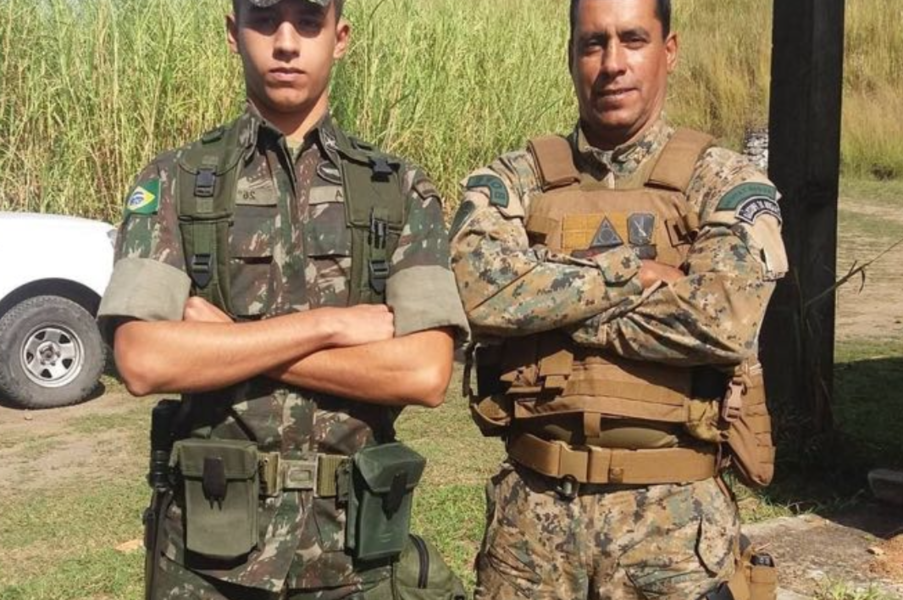
What keeps a BOPE operator going?
Thomas Lojek: From a psychological point of view:
Working in this dangerous and highly violent environment every day …
How do you get back into the fight?
Especially after days when things were looking bad on your battlefield?
What keeps a BOPE operator going?
How do you stay in the fight?
Daniel Rocca: I’ll tell you about a situation that happened recently.
One night, we moved into a slum, and it was very quiet.
Very, very quiet, actually.
We knew something was going to happen soon.
We knew that.
It was everywhere.
It was night, and we could basically smell the danger in the air around us.
So, we positioned ourselves and divided our teams as we always did to have a tactical advantage over the enemy.
At one point, a team received incoming fire and was the main target.
It was an ambush.
And it was very well done.
We have to give credit to the bad guys for that.
So, a team was stuck and under constant fire.
A man from the targeted team was lying wounded.
When the confrontation (shootout) started, they were unable to get him off the street.
A bad time, really.
And it got worse by the second.
For me, as a sniper, this situation meant that I had to move and reach higher ground to send cover fire at the guys who were pinned down.
When I reached the perfect terrain, I had already defeated two of the bad guys on the way to my new position.
Now, in my new field position, I was able to do a quick 360-degree analysis of what was going on and started the cover fire for my team.
With cover fire in effect, my team was able to get the only man out of the hot zone.
He wasn’t dead, but it didn’t look good with a chest wound.
We came to the rescue.
On the way, another policeman was shot.
Strong fire came from everywhere, and I shot off the street lights to darken the scene.
From my position, I could see that the second wounded policeman was near a construction site, and I ran to put him in shelter.
But he died in my arms.
And being with a brother dying in front of me like that is one of the worst moments ever.
These are really the seconds when you have to recompose yourself and try not to lose control.
As a BOPE operator, you live and breathe under the understanding that only the mission matters, and if one of us loses control, we put everyone at risk.
That’s why you have emotional control beyond the normal range.
At this point, with my rifle, I shot off all of the street lights until everything was very, very dark around us.
So, I provided cover fire while the rest of the team left the scene, and we rescued the first police officer who was shot when the attack started.
We also took the police officer who had died at the scene.
They were taken to the hospital, and at the hospital, all I could focus on was getting my team together, getting everyone ready and properly informed.
And then, we ran back to the scene.
The sun was rising on the horizon.
We already had two shifts behind us.
We had been at work for 48 hours.
One of our brothers dead, another in surgery.
But we didn’t back down.
We were there to finish our mission.
Another team joined us on the spot.
And we again went in search of traffickers, where we arrested many drug dealers who had gunshot wounds.
After the firefight, I refused to go home.
What did all this mean for my morale and my team?
You have to know: the policeman who died in my arms … was a friend.
I knew his wife and children.
Holding him while he was dying was really one of the worst moments for me.
But when we enter BOPE, we know that these things will happen to us.
We know that.
It really hurts; losing one of us is like losing a brother.
But it’s all about the mission.
The focus is really on the mission.
And from there we get up and do the work.
This is what BOPE is …
We complete the mission!
Photo Credits: Daniel Rocca