Thomas Lojek
Greg McKinney:
Tactical Driving Training
2022
Greg McKinney is director and program creator specializing in high-performance driving and tactical mobility solutions for elite military and law enforcement units.
Tactical Driving: Examples
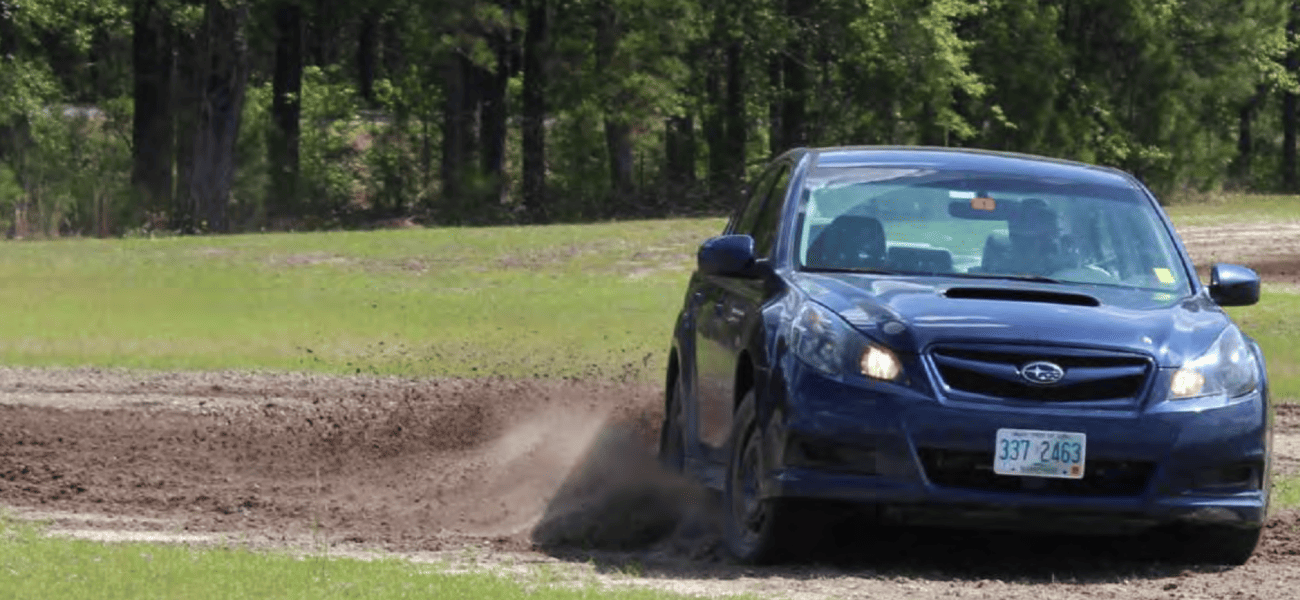
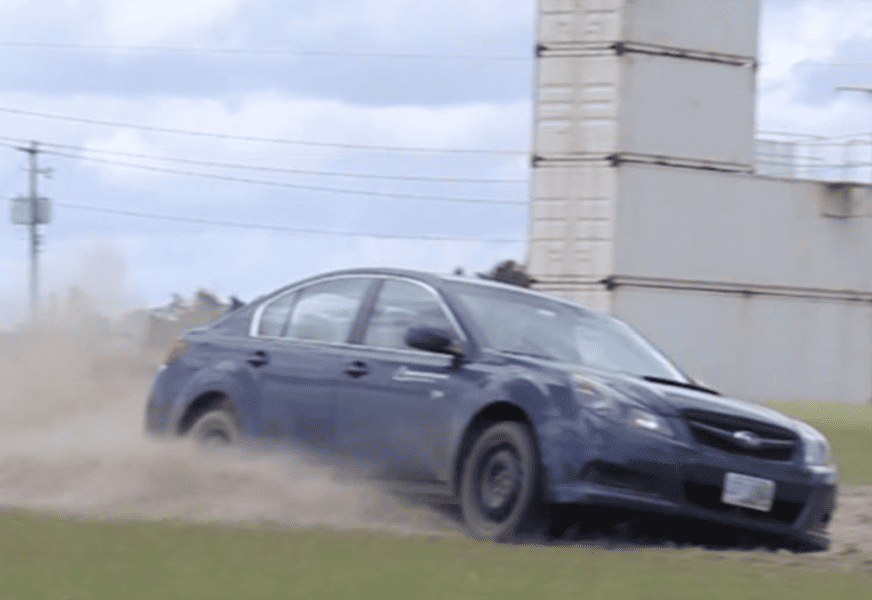
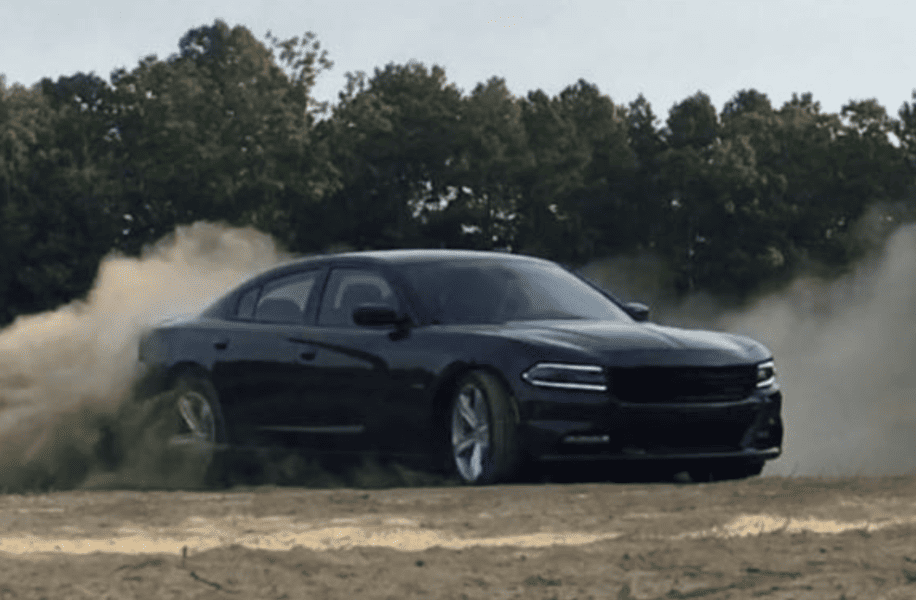
A vehicle at limits. The car is sliding to driver’s left.
There’s some counter steer dialed in.
Driver is on the power, transferring weight to the back and killing rotation.
His eyes are looking in the direction of travel (not where the car is pointed).
All in all, he’s in good shape
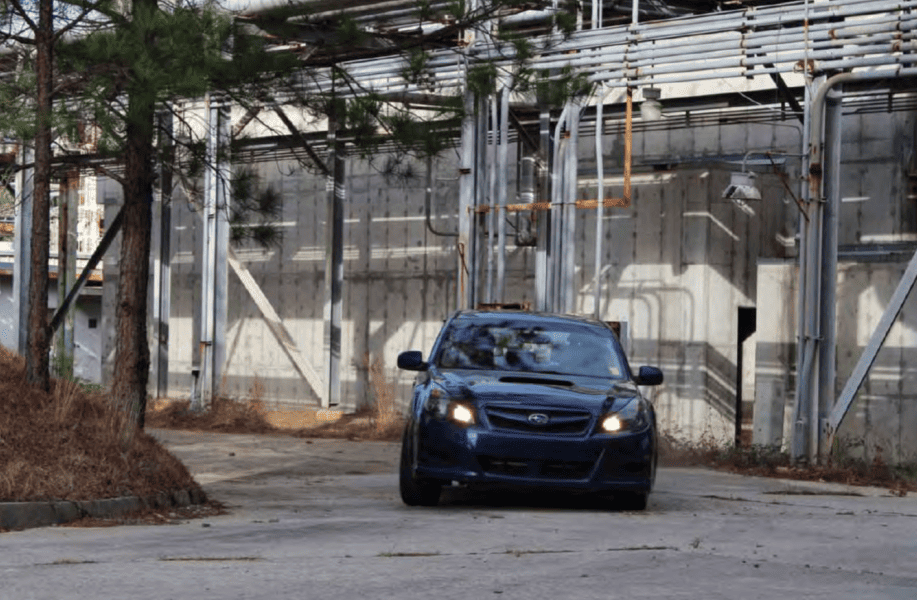
It’s important that students drive on multiple surfaces, both hard (pavement, concrete) and loose (gravel, clay, snow) to develop fundamental skills across environments.
It’s also important for students to drive in real environments.
When the hazards are real students take things a bit more seriously and learn valuable lessons regarding how easy it is to disable your lifeline.
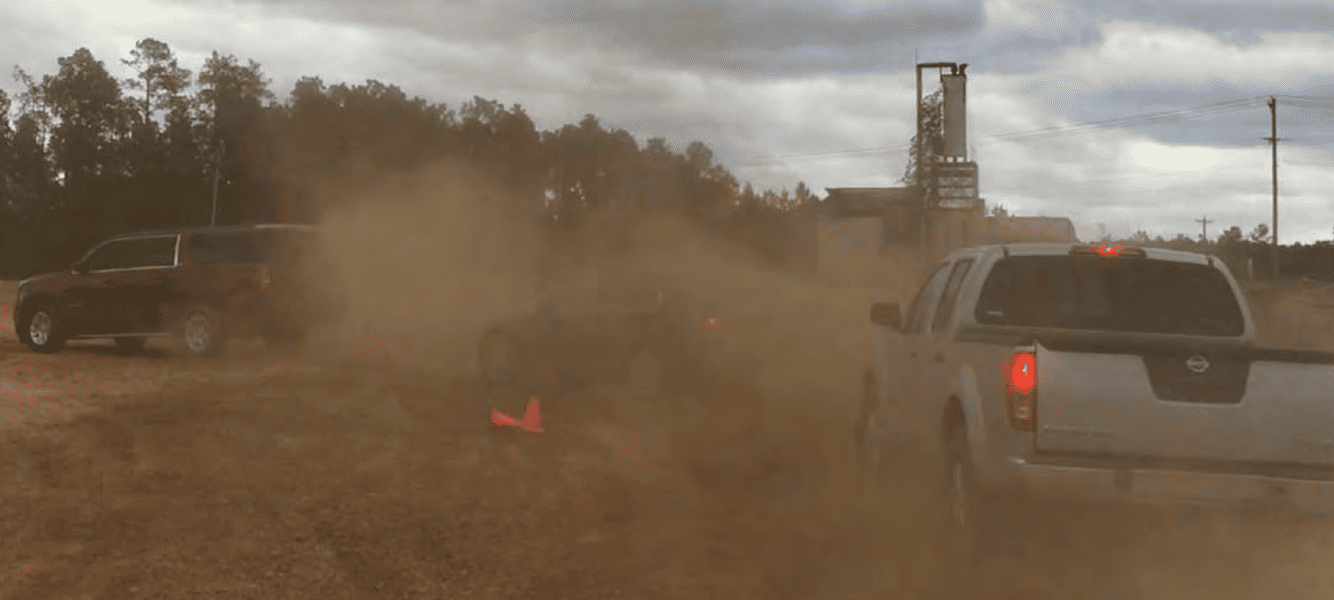
Multiple vehicle types driving at speed in low visibility.
It’s important to us that students switch vehicle types often.
Here we have a Yukon, BMW 330xi, and Nissan Frontier.
They all have different performance characteristics and students must adapt their driving to the vehicle.
It’s also important to us that students get comfortable driving at speed close to other vehicles.
Tactical mobility and what that means in the real world
Usually when I’m asked to write these sorts of articles, I respond with a variation of an article that I’ve been writing for 15 years or so.
I start out with statistics demonstrating the lethality of motor vehicles for both professionals and the general population.
I follow up with data demonstrating clearly that well-taught and practiced car control skills have a huge positive impact on safety.
Then I’ll get into a discussion of “tactical mobility” and what that means in the real world.
But lately I’ve been feeling like a dinosaur just waiting for the asteroid.
This is why.
Cars and bikes are loaded with automatic safety systems, now, automatic braking, active cruise control, lane departure warnings, blind spot warnings, and in some cases, full autonomous operation.
Within a few years, autonomous operation will mature and become more common, even in tactical environments.
Within another few years, autonomous operation will become the norm.
But we’re not there, yet.
Despite the impact of semi-autonomous safety systems, vehicles are still incredibly lethal for professionals and the general population alike, both in the States and globally.
It will probably be decades until autonomous systems are the norm around the world.
I’m lucky in a way.
My own demise is likely to coincide with the demise of the human operator.
So I’ve got a few good years left of teaching high-performance driving for tactical environments.
I’ve got a few good years left of value and doing what I love: Tactical Drivers’ Training / Tactical Mobility.
Skills to drive at or near the physical limits
Although we use the term tactical mobility in our marketing, as many other training companies do, truth be told it’s tough for us to use that term with a straight face.
Most imagine tactical mobility as J-turns, PIT maneuvers, ramming … jumping your ride off a pier into a departing ferry.
There are a plethora of life-saving skills that can and should be taught and practiced before those techniques of last resort.
In our world—learned from the special operations community over many years—there is really is no such thing as tactical mobility.
There is only driving well in any vehicle, on any surface, at any speed.
Before anyone can execute tactics effectively, they must be proficient with the tools at their disposal.
For your primary weapon, you’ve spent countless hours on the range, in shoot houses, and classrooms.
You are proficient with your primary weapon, your lifeline.
Behind the wheel, however, your vehicle is your lifeline.
Your lifeline.
Despite the lethality of motor vehicles, we spend little time training driving.
The general perception is that it’s easy to operate a motor vehicle.
To operate a vehicle is relatively easy.
But it’s a learned skill to drive at or near the physical limits of any given situation.
Operating a vehicle is easy.
Driving well, effectively, and safely is not.
Those skills need to be taught.
Tactical Driving: A few personal real-life examples
I’m not a soldier, never have been.
However I have been working with the special operations community for many years.
I listen to my students.
Many of these soldiers also become our instructors.
Out of this collaboration our basic philosophy has become learn the fundamentals of high-performance driving because these skills are effective in all vehicles and environments.
The knowledge is easy to impart.
With knowledge, however, students need experience to become effective drivers.
And this experience can only come by driving (a lot) under adult supervision.
We spend very little time in the classroom.
Most of our time is spent on the range with a variety of vehicles, environments, and surfaces.
A few personal real-life examples
As I wrote above, I’m not a soldier, never have been.
But I have been traveling in South America for more than 20 years, including Colombia when it was really interesting as a gringo to travel by land.
I love South America.
So, please don’t let the following anecdotes characterize that continent.
They’re just good examples of real-life lessons.
Example 1
There’s a large capital city that sits in a bowl surrounded by mountains where many satellite cities and communities are located.
Connecting these communities to the capital are multi-lane arterial highways, which are often mired in traffic.
Over many miles stretch bumper-to-bumper cars, stopped much of the time or only creeping along.
Then traffic will move for a bit until it bogs down again, much like any urban center in the States.
However, unlike the States, here you can watch folks stroll down out of the hillside communities, pistols in their hands, preparing to rob those same cars stuck in traffic.
I sat there one day many years ago, watching the banditos approaching.
My “mad” driving skills meant absolutely nothing.
There wouldn’t be a damn thing I could do when they got to me.
I am not going to ram my way out or push miles of cars out of the way.
I could not Jason Bourne this.
Dumb luck saved me.
Traffic started to move before my number was up.
Example 2
Also on a downhill highway leading to a large city but a different country, I was cruising along with the flow of traffic, highway speeds.
Traffic was relatively light.
It was a six-lane road.
At the time, one of the tactics the bad guys employed was to cause an accident then rob those involved.
A common method was to cut in front of someone, slow, then hit the brakes hard to cause a rear end collision.
Now, did I know this at the time?
Maybe.
Maybe I had read it somewhere.
But that knowledge had nothing to do with what came next.
Out of the corner of my eye I caught a four-door Dacia sedan scream by on the right.
It swerved in front of me as the brake lights came on.
Without hesitation I threw the wheel over hard to the right, turned back, got on the power, counter steered and continued on my way.
It was over that quick.
But the thing is, I had the confidence to throw the wheel over 90 degrees without hesitation at 65 mph or so.
I have no idea if I was about to get robbed or if an idiot just cut me off.
I would never find out, but for sure training saved me from an accident that would have disabled my lifeline.
Example 3
This was a fun one.
I was working with police in Northern Brazil.
We had blocked off some dirt roads out in the countryside to work on a few basics.
Their duty vehicles were Toyota Camry’s, front wheel drive with a fairly powerful V6.
My ride was an impressive GM shitbox sporting a 3- cylinder, 1.0 liter engine, also front wheel drive.
We had worked on various things throughout the morning and were having lunch.
As often happens, my students were pressing me to do J- turns and PIT.
Since this wasn’t a formal training session and we had all these wonderful dirt roads to play on, I made a bet with them.
If they could catch me and get close enough to PIT, I would teach them.
But if they couldn’t then we’d continue working on fundamentals.
There was one caveat, they couldn’t chase me until I went by them at 80 kph (about 50 mph).
Now, truth be told, my little one liter hatchback may have been faster in the corners.
I was much lighter and, I think, could carry more speed changing direction.
The short story is I didn’t have to teach PIT.
They couldn’t catch me.
It wasn’t because I’m an awesome driver.
It was because they had not yet learned and practiced enough fundamentals.
Even if I were slightly faster than them in the corners, their horsepower advantage should have made short work of me and my one liter hatch.
The point to these stories is that physics are physics.
Sometimes the physics of a situation provide you with no driving options.
But if you can exploit the physics of any given situation without exceeding limits, in other words, if you can drive at limits safely, then you have many more options available.
In order to drive at limits, you must learn certain driving skills that, once learned, will make you a much safer driver even when you aren’t pushing.
The only way to learn these skills and retain them is through instruction and practice.
You need experience.
You need to gain this experience in a safe environment, in a training environment on multiple surfaces with good instructors.
QUICK STATS ON LETHALITY OF MOTOR VEHICLES
- Despite “drivers’ training” year in and year out law enforcement motor-vehicle-related accidents kill as many officers as guns do and is always a leading cause of injury. – National Law Enforcement Memorial Fund
- In the long-term, three times as many US soldiers will die in cars than in combat. – Defense Manpower Data Center
- Even during peak deployments over the past 50 years, about one-third of soldier deaths were motor vehicle related. – Defense Manpower Data Center
- While school shootings are abhorrent, in the United States, we kill 3-4 kids under the age of 16 everyday in motor vehicle accidents.
If all teenagers are included (up to age 19), this number jumps to about 11 kids/day (far, far more than school shootings). – US Department of Transportation
But can car control skills help reduce the number of deaths and injury related to motor vehicles?
In Northern European countries, where true car control skills are taught over a years- long process to full licensure, motor vehicle accidents were reduced up to 20% across entire populations, including people who were licensed before such stringent requirements were mandated.
Not only do car control skills have value for the general population, they have high-value for special operations and law enforcement.
Despite the fact that it could help reduce deaths and injury, as well as operating costs significantly, even at the Federal level, drivers’ training is inadequate in both depth and duration.
Good drivers’ training enhances dynamic vehicle control systems.
Good drivers’ training enhances operational capability immensely and saves lives.
Absolute Vehicle Control’s – Specialized Driver Training hosted at GTI’s Joint Operations Center
Photo Credits: Greg McKinney