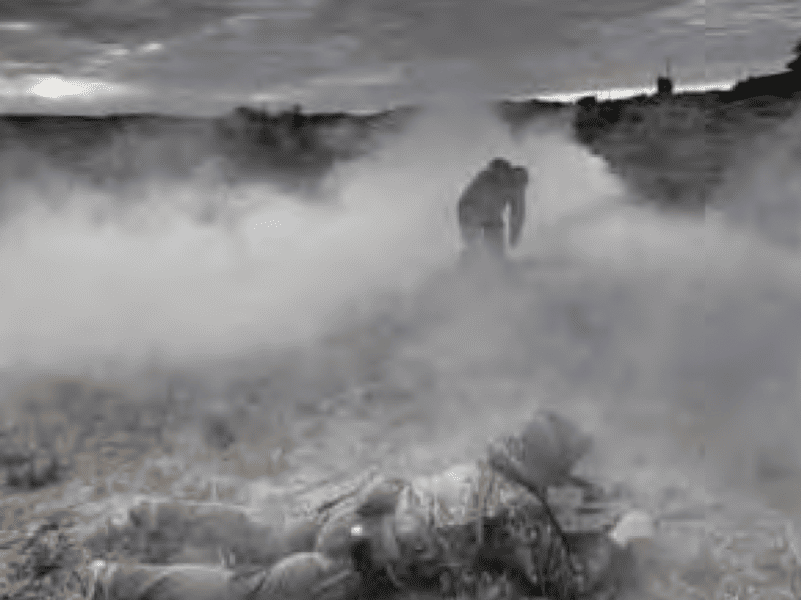
Thomas Lojek
Brian Bewley:
Tactical Casualty Care
Under Fire Training
2022
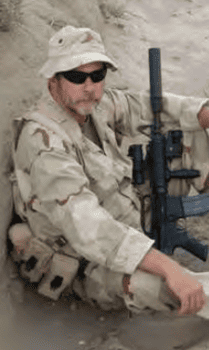
Brian Bewley is a retired SF CWO who served with the 1st and 7th SFG(A)s, USMILGRP El Sal, and SFUWO in Key West.
Upon his retirement, he served as an advisor to the UAE Special Operations Command and as a security manager in both Baghdad and Yemen.
Brian established Tactical Solutions International, Inc. in early 2003, a leading provider of risk management, training, and operational support services to government and commercial clients worldwide.
Why Tactical Casualty Care Matters
“Medic”
“The bullet clipped the nylon edge of the right side of my plate carrier and punched through my chest, stopping at the ballistic plate on my back.
I felt the punch of the round as it hit me, but it didn’t hurt really.
‘What the hell was that?’ I thought as I ran towards my truck for cover.
As I crouched behind the rear tire of my truck, I wondered where the shots were coming from, as I needed to return fire.
I suddenly seemed to be having a hard time catching my breath from the short sprint to my truck.
My right hand did a quick sweep under my armpit, and when I saw the blood on the back of my glove, I knew that I had been shot…then the pain started.”
The scenario above could be a military member on patrol in Afghanistan, a sheriff’s deputy moving towards an active shooter situation, or a law-abiding civilian protecting his property in rural America.
Maintaining the skills of shoot, move, and communicate are cornerstone tasks for those who serve or live in a hostile or tactical environment.
In that environment, however, one could find themselves on the receiving end of bombs, bullets, burns, blood, and beyond.
The ability to save the life of a teammate, family member, or self while under fire is a critical skill set, and this is addressed in the Tactical Casualty Care Under Fire course presented by Tactical Solutions International, Inc., at their facility in Crowheart, Wyoming.
ABC’s, CAB’s, ABCD, DR ABC, or…?
Emergency and tactical medical training has always been a part of team cross-training within a Special Forces Operational Detachment-A (SFODA).
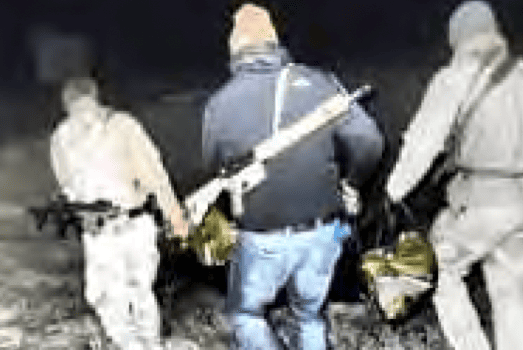
Having Weapons Sergeants give IVs under a poncho using a red-lens flashlight in the field under the watchful eye of the team medic, for example, was a basic skill that everyone maintained.
We understood that our operational tasks and environments would require that everyone on the team possess above-average medical skills.
Mix the medical training in with the required weapons and marksmanship training, commo, demolitions, intelligence skills, tactics such as direct action raids, unconventional warfare, combat diving, freefall parachuting, operational deployments, support tasks, and activities, for example, and you keep the ODA busy and employed.
If not in combat or deployed, the team is constantly rehearsing, training, and being evaluated to ensure flawless execution of their assigned tasks.
The traditional basics of emergency medical care have revolved around the generally accepted standards of the ABCs: Airway, Breathing, Circulation.
The ABCs were originally established as a protocol for Cardiopulmonary Resuscitation (CPR), but they were also used to establish lifesaving steps for basic first aid through pre-hospital care.
In 2010, the American Heart Association rearranged or modified the ABC to CAB as a new protocol for CPR by moving the C before the A and B and changing the meaning of C from circulation to compressions.
There have also been variants of the ABCs to include ABCD, ABCDE, ABCDEF, etc., depending upon who was instructing the medical interventions and life support.
It was explained to me a long time back that the ABCs were to assist in medical situations (like CPR or choking in a responsive or non-responsive patient), while CAB was to be used in trauma.
In 2018, while I was recertifying as a National Registry EMT-B, we were still taught the basics of ABCs and CAB.
In early 2017, one of TSI’s medical instructors, Mr. Dave, an NREMT-P (Paramedic), was conducting team training for the TSI Recondo course, and he introduced the class to a new protocol that was being taught in Tactical Combat Casualty Care (TCCC) and Advanced Trauma Life Support (ATLS) courses, which was better applied to tactical operations vs. the old standard ABCs.
He introduced MARCH.
From ABCs to MARCH
What is MARCH?
When asked about the differences between the ABCs, CAB, and MARCH, Mr. Dave said, “Don’t think of MARCH as a new mnemonic, but as a new framework that prioritizes trauma care, especially in a live-fire environment.”
MARCH stands for massive hemorrhage, airway control, respiratory support, circulation, head injury.
Here’s a breakdown of MARCH (Duckworth, Rom 1 Sep 17 ABCs vs. MARCH).
The MARCH Priorities in Trauma Care
Massive hemorrhage
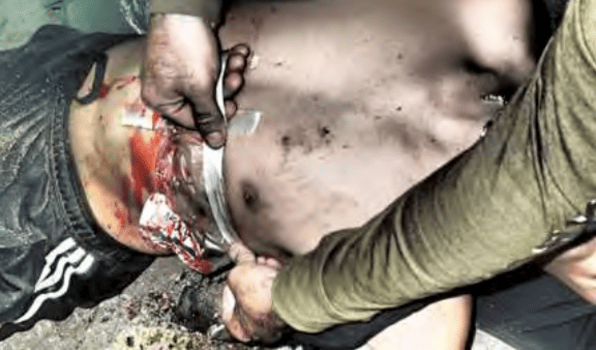
M reminds us that bleeding control is the top priority in trauma care.
It also clarifies what kind of bleeding control we are talking about.
Not all bleeding control is a priority.
For example, bleeding could easily refer to a spurting, lacerated artery; trickling blood from a skin tear; or a scrape that stopped losing blood before help even arrived.
On the other hand, massive hemorrhage gives a clear picture and means the same thing to pretty much everyone: immediate, active, life-threatening bleeding that will kill a patient if not stopped.
Massive hemorrhage can be addressed by the four Ds:
□ Detect: find the source of the bleeding.
□ Direct pressure: hold pressure on the source of the bleeding until the clot forms.
□ Devices: if necessary, use equipment such as tourniquets, hemostatic gauze, and pressure bandages to supplement direct pressure.
□ Don’t dilute: use the concept of hypotensive resuscitation to avoid thinning the blood or pumping established clots.
Airway control
A reminds us that airway is still a key care element for severe traumatic injuries.
The patient needs a patent airway to survive.
Think of the use of Nasal or Oral Pharyngeal tubes.
Respiratory support
R is where breathing comes in.
If a trauma patient is fighting for air, remember that not only are they not getting enough oxygen in, but they may also be using a lot of that oxygen in their failing struggle to breathe.
Assisting the patient with or taking over respirations can move more air while simultaneously decreasing the patient’s respiratory effort and use of so much oxygen.
Keep in mind that over-ventilation can also do more harm than good.
Ventilation provided with too much volume, speed, or force can increase pressure in the chest, reducing blood return to the heart.
This can have a negative effect on circulation, especially in trauma patients progressing towards shock.
Circulation
The C refers to circulation (shock).
After massive hemorrhage, airway, and breathing have been addressed, we need to optimize the patient’s circulation.
Standard methods for circulation improvement, such as laying the patient flat, maintaining body temperature, and careful fluid resuscitation, all apply.
Hypothermia
Hypothermia is a critical factor in trauma care that is not often discussed.
It is a key part of the so-called trauma triad of death, including hypothermia (low body temperature), H+ (acidosis, which disrupts the blood’s ability to properly carry oxygen), and hypocoagulability (thinned blood or blood that has a reduced ability to clot).
The trauma triad can begin with any one of these elements, and each feeds into the other.
As the patient goes into shock, their body temperature drops, reducing their blood’s ability to clot.
As they bleed out more, they go further into shock, worsening their acidosis.
As acidosis worsens, metabolism slows, and body temperature continues to fall.
And so on.
Head injury / hypothermia / hypovolemic
Head injury care is ensuring that a primary injury does not turn into a permanent secondary injury (injury caused or worsened by inadequate trauma care).
Care for patients with severe head injuries must avoid those H bombs:
• Hypoxia: even a momentary drop in oxygen saturation can cause permanent secondary brain injury.
• Hyperventilation: as already mentioned, too much or too fast ventilation can worsen shock.
In addition, hyperventilation will blow off too much CO2, causing cerebral vasoconstriction, further decreasing perfusion to the brain.
• Hypotension: as intracranial pressure increases, the blood pressure required to perfuse the brain also increases.
The rule of thumb is to avoid systolic blood pressure below 90 mmHg.
• Hypoglycemia: while there is nothing inherent to head injury that will drop blood sugar, an injured brain deprived of needed sugar will have a worse outcome.
Additional considerations:
• Hypovolemia: a decreased volume of circulating blood in the body.
Training Casualty Care Under Fire
The latest TCCC Summary of Changes (Aug 2019) incorporates three distinct emergency trauma management plans or phases: Care under Fire, Tactical Field Care, and Tactical Evacuation.
TSI’s Casualty Care Under Fire course incorporates all three phases within a single program.
The course consists of 3 very long days and nights of trauma care performed in a tactical, live-fire, scenario-based program of instruction by Mr. Bob Claar, TSI’s primary tactical medical care instructor.
“The real eye-opener for many students attending this course is the challenge of trying to save a life, yours or a teammate or buddy, while under constant fire.
After almost two decades of war, tactical casualty care has come a long way in defining protocols of action.
Life expectancy of our soldiers serving in harm’s way today is much higher than that of those who served in Viet Nam, for example,” stated Bob.
“Training, increased use of tourniquets and blood stoppers, field use of Needle Decompression in tension pneumothorax, understanding TBIs, and rapid evacuation are just a few of these protocols that are keeping our guys and gals alive in bad situations, and we teach it all and more in the Casualty Care Under Fire course.”
Green Beret John Wayne Walding: Many people would have stopped fighting
Bob recounts the actions of former Green Beret John Wayne Walding and uses his example for this critical training.
Walding was one of 15 Green Berets with a small group of attached Afghan commandos who were tasked to kill or capture a high-value target in Afghanistan.
They were inserted by helo into a riverbed in a remote area of Shok Valley, and as they climbed the steep mountainside towards their objective, they were ambushed by approximately 250 Taliban insurgents.
The outgunned Green Berets battled for over six hours, with most of the Green Berets being wounded.
About 3 hours into the battle, a Soviet 7.62x54R round hit Walding below his knee, basically amputating his lower leg.
He applied a tourniquet above the wound and tied his severed lower leg to his thigh with his bootlaces so he wouldn’t lose it, and he continued fighting for the next three hours until he was carried off the mountain by his teammates for exfiltration.
Many people would have stopped fighting over the mere psychology of the wound.
Many others would have bled out and died due to shock or will to survive.
John was trained in basic trauma care and also understood the need to stay in the fight for his brothers in arms.
John did ultimately lose his leg, but he did not die on that mountaintop in Afghanistan.
2019 TCCC update: Basic Management Plan for Care Under Fire
From the 1 August 2019 TCCC update: Basic Management Plan for Care Under Fire
1. Return fire and take cover.
2. Direct or expect casualty to remain engaged as a combatant if appropriate.
3. Direct casualty to move to cover and apply self-aid if able.
4. Try to keep the casualty from sustaining additional wounds.
5. Casualties should be extricated from burning vehicles or buildings and moved to places of relative safety.
Do what is necessary to stop the burning process.
6. Stop life-threatening external hemorrhage if tactically feasible:
• Direct casualty to control hemorrhage by self-aid if able.
• Use a CoTCCC-recommended limb tourniquet for hemorrhage that is anatomically amenable to tourniquet use.
• Apply the limb tourniquet over the uniform clearly proximal to the bleeding site(s).
If the site of the life-threatening bleeding is not readily apparent, place the tourniquet “high and tight” (as proximal as possible) on the injured limb and move the casualty to cover.
7. Airway management is generally best deferred until the Tactical Field Care phase.
Photo Credits: Brian Bewley