Thomas Lojek
Brian Bewley:
Tactical Training in
Cold Weather Environment
2022
Brian Bewley is a retired SF CWO who served with the 1st and 7th SFG(A)s, USMILGRP El Sal, and SFUWO in Key West.
Upon his retirement, he served as an advisor to the UAE Special Operations Command and as a security manager in both Baghdad and Yemen.
Brian established Tactical Solutions International, Inc. in early 2003, a leading provider of risk management, training, and operational support services to government and commercial clients worldwide.
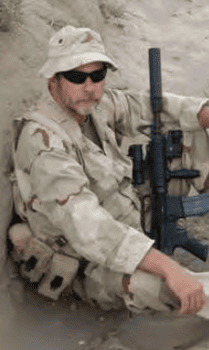
Trying to survive in the field in Fort Bragg during an ice storm
“Nothing burns like the cold.”
George R.R. Martin
I remember having multiple discussions recently over which environment is worse to train and operate in… the cold or the heat.
I have been pulling an Ahkio across the Alaskan wilderness at -50F, and I have lived in a hide-site in the sands of the Middle East at almost 130F…
I can tell you that they BOTH sucked!
In terms of the most memorable or ultimate misery however, my memory takes me to two different environments that in no way compared to the extremes that I mentioned above:
1. Trying to survive in the field in Fort Bragg, North Carolina during an ice storm at 31F still haunts me to this day!
There were exposure deaths during that training exercise, and decades long memories of how badly Mother Nature could fuck you at the drop of a hat!
And…
2. Trying to survive in the jungle in Panama during a week-long recon, 88F and full rainy season.
Covered in prickly heat, crotch rot, trench foot, black palm wounds and insect bites head to toe.
I dreamed of pulling the Ahkio in -50F just to stay alive until exfil!
The military understood the need to keep us trained in various environments, as we can never predict when or where the next global gunfight or police action would occur.
Since hanging up Uncle Sam’s rucksack, my family and tactical training company returned to the State of Wyoming.
Besides being the least populated State in the union, fully pro-2d amendment and rich in conservative values, it can be cold.
I have seen snow at our ranch in every month, except for August.
While many trainers and students have no issue with training in fair weather, many choose to conduct training indoors or worse – they cancel their training during inclement weather or in the cold of winter.
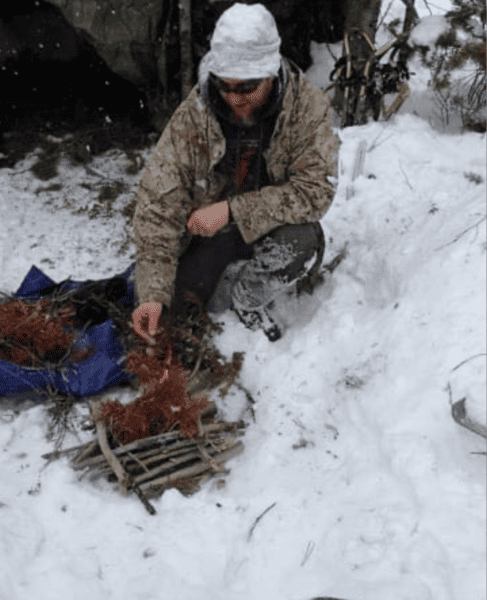
One must train in new environments for skill proficiency
Those who live and work in these cold environments MUST train in all applicable local environments, inside and outside, to develop or maintain their skills.
As an example, one of our standard monthly training events is the Wyoming Concealed Firearms Permit (CFP) course conducted for the local community through our Community College.
This is a basic and required course of instruction for those who do not already possess the training and experience to be licensed by the State of Wyoming to carry concealed.
The class is conducted at our local gun club indoor range and when the students graduate, they possess the skills, knowledge and minimal experience to legally and safely carry a concealed pistol “in the environment for which they were trained.”
What this means is – regardless if it was -20F or 100F outside of the classroom, the students were trained in an environmentally controlled classroom and range and have the basic skills, knowledge and minimal experience of carrying a concealed pistol under a very light jacket or shirt in a like environment.
It does not provide them with the experience or expertise to carry concealed within a different environment, such as with minimal clothing on a beach or bundled under 3 layers of clothing while wearing arctic gloves in a blizzard at -20F.
One must train in these new environments for skill proficiency.
“What does not kill you, makes you stronger” … German philosopher Friedrich Nietzsche
Whether you are currently living in a particular environment (urban, rural, winter, summer, desert, high altitude mountain, maritime, jungle, arctic, etc.) or you are temporarily visiting these locations or conducting environmental training, there are some general guidelines that I always recommend.
As we are currently discussing cold weather environments, lets focus on this for recommendations:
1. Be prepared (always!)
The Boy Scout Motto.
While on the range training, traveling by vehicle, hunting, hiking in the back country or while in your home/place of work – always have a fully stocked, equipped and accessible Cold Weather Survival Kit or bag (bug out or get home bag).
Winter is unpredictable and can change from an awesome 50F spring like, sunny day to -10F and blizzarding over the course of an hour or two.
There are so many stories of people being trapped in their vehicles or needing to make an emergency snow cave or were generally challenged with they lost power and heat in their homes due to rapidly changing weather.
I always have food, water, blankets, signaling devices and medical supplies in my vehicles.
Preparing for every situation is nearly impossible, so plan for contingencies that you have a high probability of encountering.
There are many online resources for “how to setup a winter survival bag” or essential items that you need to have such as:
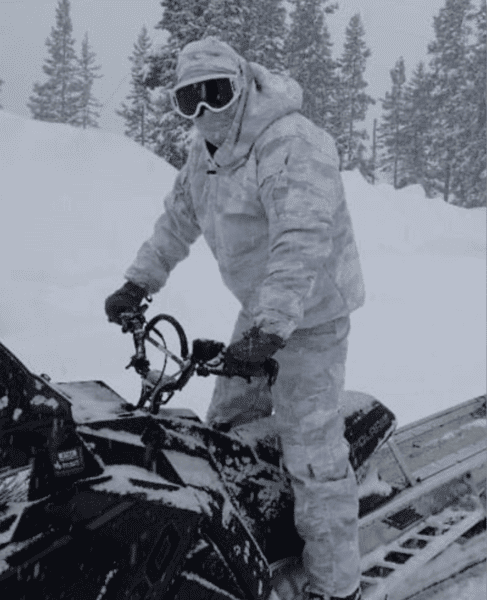
2. Training Plan and Goal
The type of training and the training location are two critical areas to address in the planning and preparation of cold weather instruction.
Firearms training, tactical training, and survival training are just some of the general areas that we concentrate on throughout the year – regardless of snow, ice, winds, freezing rain, etc.
Historically, in mid-December, we conduct our Low Light/No light pistol course on our outdoor 25m range.
Winds are typically out of the west at 25 mph providing a wind chill temperature of between 0 and -15 with a high probability of standing snow.
As part of our planning and preparation, we have always positioned a warming trailer near the range with hot coffee and heat and provide breaks as required for safety.
Student performance degradation due to the cold (mental weakness and potential for minor cold weather injuries) are highlighted by the instructor.
Is the cold the only difference between our Low Light/No Light pistol courses that we conduct in May or June and the December class?
Absolutely not!
Glove removal, weapon and magazine manipulation, ancillary equipment such as lights, reloading magazines, drawing and re-holstering from concealment under multiple garments are just some of the additional skills that must be mastered to operate skillfully in a cold environment.
We could not realistically gain the experience or train these skills with any competency indoors.
Remember, absence of a plan leads to chaos, so plan accordingly and ensure that the training has an end state or goal.
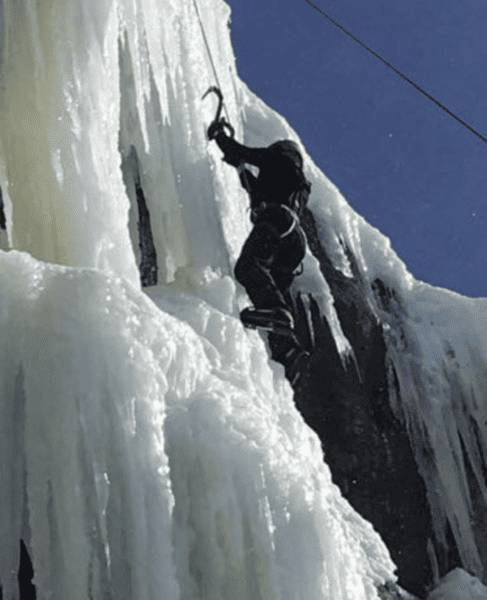
3. Specialty Gear and Equipment Common to All
Proper seasonal equipment, range gear, clothing of the correct type and properly layered, survival requirements (food, water, shelter, security, comms and health).
Anything and everything that we train for in the “nice” months, can be trained in the winter, but we do need some specialty gear and to ensure that the equipment common to all is adequate for the task at hand.
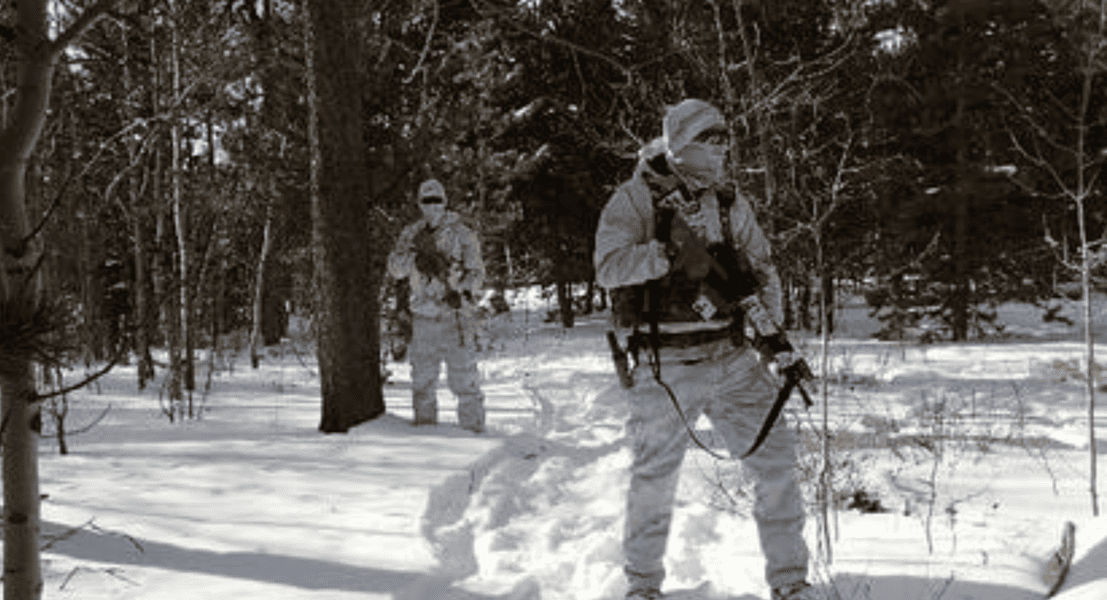
When the snow begins to fall and the ice forms, we have already dusted off, tested and re-acquainted ourselves with our winter gear.
We are ready to continue training regardless of the temperature or cold conditions.
Application of Tactics, Techniques and Procedures may change a little due to the addition of this winter equipment, but tactics are tactics.
Our specialty gear is required for mission/training accomplishment, safety, health or due to direct environmental considerations and should be planned for.
My SF ODA conducted a Full Mission Profile Direct Action/demolition mission in Korea up by the DMZ years back.
The task was to drop a critical bridge while conducting Unconventional Warfare as part of our war planning.
We were already carrying what seemed like insane rucksack weights, so we chose to forego personal comfort equipment, extra water and we carried only minimal food.
We infiltrated the area with all the equipment needed to accomplish the mission and little else.
A freak cold front dropped upon us 24 hours before target hit time and we were totally unprepared for the sub-freezing temperatures.
I thought of our soldiers and Marines who had fought at the Battle of Chosin Reservoir in North Korea, who were not too far from our position during the period of November and December 1950.
They too were underequipped, outgunned and freezing.
They were hard men back then and we were about to test our hardness as well.
We froze our balls off, learned a lot about the hardness of each of our teammates and accomplished the mission.
If I had to do that again, I would bring a bit of cold weather personal gear however as there is a fine line between being hard and being stupid.
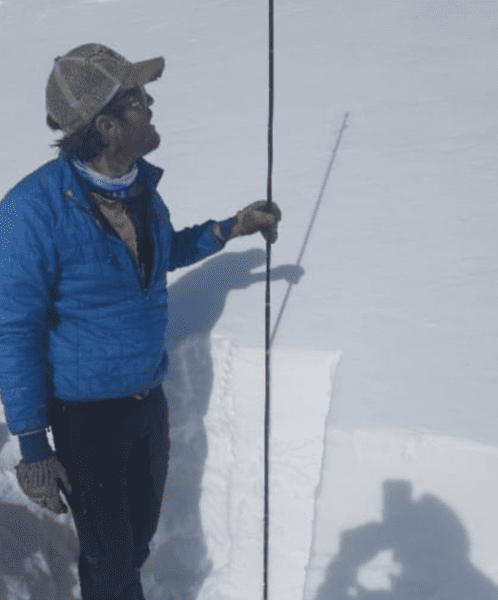
4. Fitness, Health and Medical Considerations
Winter/cold weather training is hard.
There are two specific areas that can lead to different maladies that we need to be aware of: 1. Cold, and 2. Altitude.
Either or both can lead to significant medical maladies.
Cold can be uncomfortably miserable if ill-equipped or not wearing proper clothing.
Painful or numb fingers/toes/ears/nose that can lead to frost nip or frost bite; and hypothermia is too real.
Movement through deep snow can sap energy quicker than the cold itself.
Proficiency in back country skiing, snow shoeing, rope and alpine skills, understanding terrain/ avalanche prone areas, layering of clothing during movement are all requisite skills – but they also require strength, flexibility, and a good level of fitness and overall health.
Smokers are known to be prone to colder feet and hands due to poor circulation.
Mental fitness is often overlooked… risk taking can and does lead to death in the mountains.
Altitude: Chronic Mountain Sickness or Acute Mountain Sickness is a reality for those training or conducting operations at altitudes over 14,000’ (Huey 2001).
High altitude is considered 4500’ to 11,500.’
Very High altitude is considered 11,500’ to 18,000.’
Extreme altitude is considered 18,000’ with altitudes higher than 26,000’ are in the Death Zone.
High Altitude Pulmonary Edema (HAPE) and High-Altitude Cerebral Edema (HACE) can be fatal diseases/injuries.
Plan for medical emergencies not only for potential altitude injuries, but also for the effects of cold weather.
Keep communications open between participants and constantly monitor each other for signs and symptoms of cold weather or altitude related injuries.
Have a realistic MEDEVAC plan, communications plan and capable medical trained individuals with equipment at the training sites.
5. After-Action Reviews (AAR)
As with any training event, the critical aspect of conducting an After-Action Review must not be overlooked.
Army Training Circular TC 25-20 A leaders Guide to After Action Reviews defines the after-action review (AAR) as “a professional discussion of an event, focused on performance standards, that enables soldiers to discover for themselves what happened, why it happened, and how to sustain strengths and improve on weaknesses.
It is a tool leaders and units can use to get maximum benefit from every mission or task.
It provides:
• Candid insights into specific soldier, leader, and unit strengths and weaknesses from various perspectives.
• Feedback and insight critical to battle-focused training.
• Details often lacking in evaluation reports alone.
Evaluation is the basis for the commander’s unit-training assessment.
No commander, no matter how skilled, will see as much as the individual soldiers and leaders who actually conduct the training.
Leaders can better correct deficiencies and sustain strengths by carefully evaluating and comparing soldier, leader, and unit performance against the standard.
The AAR is the keystone of the evaluation process.
Feedback compares the actual output of a process with the intended outcome.
By focusing on the task’s standards and by describing specific observations, leaders and soldiers identify strengths and weaknesses and together decide how to improve their performances.
This shared learning improves task proficiency and promotes unit bonding and esprit.
Squad and platoon leaders will use the information to develop input for unit-training plans.
The AAR is a valid and valuable technique regardless of branch, echelon, or training task.
Of course, AARs are not cure-alls for unit-training problems.
Leaders must still make on-the-spot corrections and take responsibility for training their soldiers and units.
However, AARs are a key part of the training process.
The goal is to improve soldier, leader, and unit performance.
The result is a more cohesive and proficient fighting force.
Because soldiers and leaders participating in an AAR actively discover what happened and why, they learn and remember more than they would from a critique alone.
A critique only gives one viewpoint and frequently provides little opportunity for discussion of events by participants.
Soldier observations and comments may not be encouraged.
The climate of the critique, focusing only on what is wrong, prevents candid discussion of training events and stifles learning and team building.”
I use AARs as a review of the Program of Instruction by activity, which guides both me, the instructor and the students in a cognitive return to the skills taught, learned and exercised.
Use what you have at your disposal to conduct the review.
If in the field, I use a stick and the earth/ snow or any other surface to scratch in movements, illustrations, or specific areas that were trained.
Returning to a classroom with white boards, chalk boards, videos and the like provide the instructor and student the ability to conduct their AAR in a comfortable environment utilizing technology to enhance the AAR.
Questions and answers solidify the learning process and validate the training goals.
Finish your cold weather environmental training as you would with any other tactical or technical training skill… use the AAR.
Training in a cold environment should not be viewed as specialty training but as a continuation of your current training program.
The environmental training might require additional skills and equipment to accomplish your training goals, but the cold is just another day on the range.
Embrace the suck and train cold, wet, tired, hungry and miserable… again, what doesn’t kill you makes you stronger!
Photo Credits: Brian Bewley