About Me
Thomas Lojek

Strategic Advisor
Security Policy
Special Operations
High-Risk Environments
Special Operations
Special Operations
as a Decisive
Strategic Domain:
I work at the intersection
of Military
Special Operations,
SWAT, Counterterrorism,
and Intelligence.
Built on trust.
I established and operate within a trusted, vetted network
of operators and subject-matter experts across military,
law enforcement, and intelligence communities.
My Expertise
Strategic Advisor
Advisory across defense, security policy,
and high-risk international environments.
Defense Industry
Growth Campaigns
Targeted communication and campaigns
for defense and security audiences.
About Me
Everything I do is grounded in operational reality — where risk is carried, decisions are made under pressure, and consequences cannot be abstracted away.
My work examines high-risk security environments through an integrated perspective, spanning special operations, tactical law enforcement, counterterrorism, intelligence, and mission-enabling technology.
This operator-domain perspective is where I established a trusted, vetted network and the credibility that keeps my work anchored in reality — while translating those realities into decision-relevant insight at the strategic and policy level.
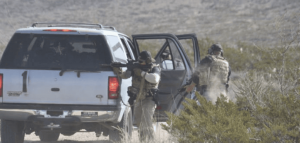
1) Military Special Operations (SOF)
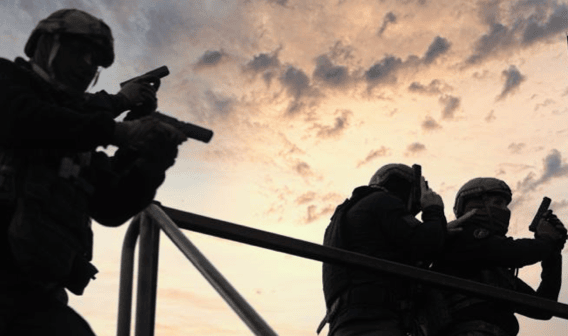
Military special operations operate at the point of maximum operational reality, where risk, uncertainty, and complex political intent converge.
Their relevance is not defined by elite tactics alone, but by the conditions under which decisions must be made: high classification, extreme time pressure, dynamic threat environments, and immediate consequences on the ground.
My focus is on the principles and lessons that shape modern special operations as a strategic factor — including doctrine, mission design, operational readiness, leadership judgment, and decision-making under pressure within complex and contested environments.
Viewed in this context, SOF function as a unique form of strategic leverage — not only because of what they can do, but because of when they are employed, why they are chosen, and how their use reshapes risk landscapes and conflict outcomes.
In my work, I examine special operations not as tactical capability, but as a decision context, drawing on direct, trusted relationships within the special operations community to ensure analysis remains grounded in real operational practice.
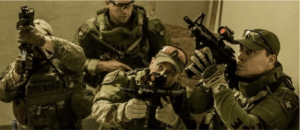
2) SWAT & Tactical Law Enforcement
SWAT and tactical law enforcement operate at the intersection of domestic security, legal authority, and immediate public consequence.
Their relevance is defined not by individual tactics alone, but by the conditions under which force must be applied: compressed decision timelines, incomplete information, legal constraints, public visibility, and the need to balance proportionality with effective operational pressure.
In this context, SWAT breaching represents a decisive moment rather than a tactical detail.
It is where intelligence, authority, timing, policy, and risk converge — often determining operational tempo, escalation, and legal outcomes before direct contact occurs.
Viewed this way, SWAT and tactical police units serve as a critical instrument in domestic crises — not because of tactical execution, but because of when they are employed, why they are chosen, and how entry and operational decisions are coordinated.
In my work, I examine these environments not as tactical problems, but as decision contexts, drawing on direct, trusted relationships with SWAT units and operators to ensure analysis remains grounded in real operational practice.
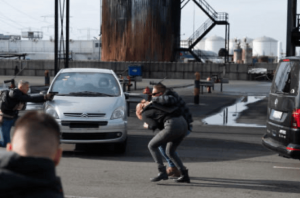
3) Counterterrorism (CT)
Counterterrorism operates at the intersection of security policy, intelligence, and high-risk operational response, where prevention, disruption, and consequence management converge under conditions of uncertainty and time pressure.
Counterterrorism functions less as a single discipline and more as a decision and coordination challenge. It requires clarity of intent, disciplined judgment, and the integration of operational, intelligence, and policy considerations — often against fragmented intelligence, legal thresholds, political sensitivity, classification constraints, and escalation risk across multiple jurisdictions and institutional boundaries.
In my work, I examine counterterrorism not as a collection of operations, but as a decision context shaped by intelligence integration, coordination, and escalation risk — drawing on direct, trusted relationships across the counterterrorism and special operations community to ensure analysis remains grounded in operational reality.
4) Intelligence
Intelligence functions as the decision architecture behind special operations, tactical law enforcement, and counterterrorism. Its relevance lies not in collection alone, but in how information is evaluated, integrated, and translated into judgment under conditions of uncertainty and time pressure.
Misalignment between intelligence and action is often where strategic and operational failure begins.
Viewed this way, intelligence serves as the connective tissue across all high-risk domains, linking policy intent, operational planning, and real-world execution into a coherent decision framework.
In my work, I examine intelligence not as a collection discipline, but as a decision context — drawing on direct, trusted relationships across intelligence, counterterrorism, and special operations communities to ensure analysis remains grounded in operational reality.
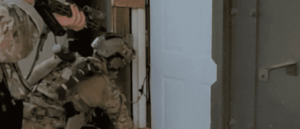
5) Operator Technology
Operator technology reshapes decision-making, tempo, exposure, and survivability in high-risk environments.
In modern operations, technologies such as unmanned systems, communications, sensors, cyber capabilities, and protective solutions are no longer peripheral.
They influence how missions are planned, how force is applied, and how advantage is gained or lost — often faster than doctrine or organizational structures can adapt.
When misunderstood, operator technology can create false confidence and unintended escalation; when integrated properly, it becomes a decisive enabler across special operations, tactical law enforcement, and counterterrorism.
In my work, I examine operator technology not as equipment, but as a decision context — informed by direct, trusted engagement with operators and technology stakeholders to ensure analysis remains grounded in operational reality and industry relevance.
⸻
What I Do
I help clarify when special operations and related capabilities become strategically relevant, why they are chosen over other instruments, and how their use reshapes outcomes.
I draw on trusted relationships across operational, intelligence, and technology communities, combining practitioner insight with disciplined analysis.
The objective is not content for its own sake, but clarity under uncertainty — supporting informed judgment in environments where decisions carry irreversible consequences.
All of my work serves one purpose: to strengthen strategic thinking grounded in operational reality, and to ensure operational decisions are informed by strategic context at the decision-making level.