Thomas Lojek
Fred Burton Interview:
Iran, Hezbollah, and the Future of Global Terrorism
14. January 2026
Update: 22. September 2026
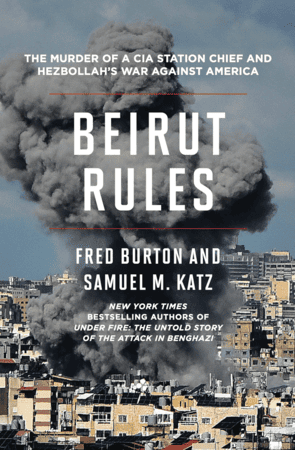
Fred Burton is a former police officer, counterterrorism special agent, and New York Times best-selling author of Beirut Rules, Ghost: Confessions of a Counterterrorism Agent, Under Fire: The Untold Story of the Attack in Benghazi, and The Protective Intelligence Advantage: Mitigating the Rising Threat to Prominent People (with Scott Stewart as co-author).
Update: 22. September 2026
Iran’s Long Game: The Asymmetric Threat
Thomas Lojek: During the early stage of the 2026 Iranian crisis, before the escalation and the U.S.-led kinetic action, we exchanged a few ideas and scenarios in the following interview.
Given the damage done to Iran’s conventional military capabilities and the IRGC, what asymmetric capabilities do you think Iran may still have?
And from a counterterrorism and intelligence perspective, where should the West be looking for the next potential threat?
Fred Burton: I’ve learned over the course of history that the Iranians play chess.
So, what is their long game when you look at what they might have left from a military perspective?
There’s no doubt that they have been decimated, specifically the IRGC.
And we don’t hear much from the MOIS. So, what are their asymmetric kinds of capabilities?
I know, on my watch, they surprised us twice in Buenos Aires, Argentina, with the bombing of the AMIA building and the Israeli embassy.
And literally, we never saw it coming.
So, if I was back in D.C., from a counterterrorism perspective, looking globally, I would be looking at the Iranian infrastructure around the globe.
I would be laser-fixated on the diplomatic couriers that might be carrying various degrees of operational plans, to include possibly weapons and explosives.
Having said that, one would think that the West is laser-fixated on every Iranian embassy around the globe, looking at it from a contingency perspective.
Operationally, the chances are that they will continue with what they’re doing, with the various kinds of attacks. And looking at them from an operational perspective, I don’t see that slowing down at all.
But there’s something in the back of my mind that tells me we have not seen the last of them, and their capabilities have historically surprised us.
With luck, I’m wrong.
Maybe I am.
We’ll see. Time will tell.
Video Update: 22. September 2026
International Terrorism in a Fractured World Order
14. January 2026
Thomas Lojek: How do you assess the role of terrorism in what many describe as an emerging New World Order?
We are seeing Iran at a historical crossroads, Venezuela increasingly constrained, Israel’s campaign reshaping the balance of power in the Middle East and removing key figures from major terrorist organizations — while the United States is pursuing its interests more openly and assertively on the global stage.
Against this backdrop, how do you expect international terrorism to change or adapt — in terms of capabilities, organizational form, and operational behavior?
Fred Burton: As a student of national security history, I’ve tried to look back at lessons from the past, and I’m a firm believer that the past is prologue to the future, as Shakespeare said.
As I look back over our current state of play, I think the world is very much like it was in the 1968 to 1972 timeframe, when we saw a tremendous amount of terrorist activity globally — inside the continental United States, Western Europe, and predominantly in the Middle East.
What stands out to me right now, as these events are unfolding, is the center of gravity of contemporary terrorism, which is Iran and its recent developments.
It’s going to be interesting to see where this goes.
It should not be lost on anybody that Iran has certainly supported Hezbollah and Hamas throughout history.
Recently, the Israelis have done a really good job of neutralizing the traditional Hezbollah threat posed in Lebanon.
It’s also been a while since we’ve seen any external Hezbollah operations. However, Iran has carried out plots and attempted attacks.
There’s something in the back of my mind as someone who’s followed Iran since the early 1980s, and who has seen enough of the tragedy caused by the Iranian regime since that time period — including the U.S. Embassy seizure in 1979.
The key question now is: What happens next to the Islamic Revolutionary Guard Corps and the Ministry of Intelligence of Iran in the context of a deeply fractured society and an ongoing crisis inside Iran?
I think it’s going to be very difficult to forecast what might occur.
One possibility is whether elements of the IRGC or the MOIS — the intelligence service — begin to defect or fragment, similar to what we saw with the fall of the Berlin Wall in 1989.
A related issue is what happens to the IRGC and MOIS infrastructure that was literally global during my watch, when I was working inside the Beltway in our counterterrorism division.
Where do disruption and changes within Iran’s terror networks ultimately lead us from a global security perspective?
At this stage, we are still looking at these dynamics from a 30,000-foot perspective, and it’s simply too early to tell.
What is also impossible to ignore inside the United States is what I call our second “Days of Rage” — a period defined by a fractured, polarized, and divided society, including the immigration blowback and related pressures playing out on the streets of America.
This will inevitably influence our broader security environment.
So, when viewed over time, I believe we are very much back in that 1968 to 1972 timeframe globally — our second Days of Rage.
And the outlier remains the same: What happens to Iran in the near future, and how will it impact international terrorism?
Video: Fred Burton on Iran | January 2026
Lessons from the 1968–1972 Era of Global Terrorism
Thomas Lojek: If we look at the period from 1968 to 1972, are there lessons or historical parallels that can help us better understand what we are seeing today?
What insights from that era should inform current security policy — and, conversely, what did security policymakers misunderstand or overlook at the time that we should be more aware of now?
Fred Burton: If you look at this from the perspective of someone who was around when we created the Joint Terrorism Task Forces here in the United States, and who also watched the development of the CIA Counterterrorism Center as we began focusing more systematically on global terrorism threats, I think counterterrorism forces — particularly within the Five Eyes, along with Western European intelligence-sharing partners — have done a very good job of breaking the back of organized terrorism.
If you go back to the 1968 to 1972 timeframe and look at groups such as the Japanese Red Army, the Red Army Faction, and Baader-Meinhof, and then inside the continental United States at organizations like the Black Panther Party and the Weather Underground, you see a very different threat environment.
At that time, these groups also benefited from external state sponsors of terror — Libyan, Iraqi, Cuban, and Russian help, as well as operational and intelligence assistance from the East German Stasi.
That kind of support structure no longer exists to a large degree, although covert action, to include cyber operational capability, still remains with the Russians.
As a result, the strategic threat posed by some more recent organizations — whether al-Qaeda or Hezbollah — is something I believe the West has largely broken the back of.
What concerns me far more, speaking from a lifetime spent in protective-security work, is the lone-actor threat.
The horrific assassination of Charlie Kirk is a stark example of that risk; so was the assassination of the United Healthcare CEO on the streets of New York City.
We have also seen attempts on the life of President Donald Trump.
That type of lone-actor, sniper-style threat is extremely difficult to detect in advance, and it is very, very worrisome.
Overall, I retain a high degree of confidence that counterterrorism forces will continue to infiltrate, neutralize, and disrupt organized terrorist groups of the kind we saw in the 1960s and 1970s.
However, I am far less optimistic that we will consistently get ahead of lone shooters who pose this kind of threat — as underscored by the brutal assassination of Charlie Kirk.
Video: The lone actor threat | A lifetime spent in protective services
State Sponsorship, Scale, and the Strategic Decline of Hezbollah
Thomas Lojek: Let’s look at the evolution of Hezbollah as a case study.
The organization evolved from a localized terrorist group into a militia, then into a broader network, and eventually into a form of global terrorist cooperation — with diversified funding streams and a wide portfolio of activities spread across multiple regions.
At the same time, recent developments suggest that Hezbollah has suffered significant setbacks, including leadership attrition, as a result of Israel’s campaign in 2024–2025.
Do terrorist organizations tend to reach a peak of power at which scale, complexity, and internal dynamics begin to reduce effectiveness — sometimes leading to fragmentation, internal conflict, or strategic decline?
And based on Hezbollah’s trajectory over the past few years, can we identify useful analytical or policy-relevant lessons about how such groups weaken, adapt, or potentially collapse?
Fred Burton: If you look back to the period when we were still trying to understand who the Islamic Jihad Organization actually was, the picture was far from clear.
At the time, we had U.S. embassies attacked in Beirut in 1983 and 1984, as well as the attack on our embassy in Kuwait.
There was the kidnapping of CIA station chief Bill Buckley, a series of hijackings, and a growing pattern of violence that we were struggling to fully attribute.
We spent a great deal of time analyzing the degree of Iranian control over the Islamic Jihad Organization, but we did not have a clear window into Hezbollah itself.
That forced us to ask what dots we needed to connect — and we were consistently hamstrung by a lack of human intelligence.
At the same time, we simply did not have the technological capabilities that exist today — SIGINT, ELINT, and related tools — nor did we have the level of global counterterrorism cooperation that later developed.
We did have allies, of course — the British, the Germans, and the Israelis — but in reality, it was still very difficult to make sense of Hezbollah as it began expanding beyond its local base and operating globally.
I remember a moment when we uncovered a large car bomb in Bangkok.
The immediate reaction was: that’s a long way from Lebanon — what’s going on here?
We started to ask whether Hezbollah could be behind it.
And it was.
Then Hezbollah struck the Israeli embassy and the AMIA building in Buenos Aires, back-to-back.
That was outside the norm.
It was an anomaly.
We were seeing the same organization hit the same city twice — much like what they had done to us earlier in Beirut.
At that point, we began to look at Hezbollah as a true global terror enterprise.
The question became how they were sustaining that reach — how they were building and maintaining those networks.
Over time, we began to unravel the Iranian-supported nexus, which brings the discussion back to state sponsorship.
If you deconstruct Hezbollah’s relationship with Iran, you can almost unpack the organization from its infancy and watch how it spread globally.
They were able to exploit the presence of Iranian diplomatic missions and facilities around the world.
They could use the diplomatic pouch to move weapons, explosives, passports, hard currency, and other materials.
They also benefited from the support of a nation-state intelligence service — much like the Stasi occasionally assisted Carlos the Jackal during the Cold War and the Russians helping Wadi Haddad in the targeting of the West, or the Libyans helping the Black September Organization.
When that kind of state-support network is in place, life becomes significantly easier for those threat actors.
It allows them to surface and strike in places where we least expect it.
So, in direct response to your question, I do believe Hezbollah has been deconstructed to the point where it no longer poses the same level of global threat it once did.
It may also be the case that the organization simply became too large as a result of its expansion.
At the same time, when its primary sponsor — Iran — begins to fragment and turn inward toward self-preservation, the dynamic changes fundamentally.
Possible Post-Iran Scenarios: Where Do IRGC and Hezbollah Networks Go Next?
Thomas Lojek: Could the security environment surrounding Iran-related networks actually become more dangerous as Iran undergoes significant political and strategic change?
As this unfolds, state-supported militias — including Hezbollah — may increasingly find themselves without sustained funding, centralized direction, intelligence support, or reliable political protection.
Is it realistic to expect that elements of Hezbollah or the Islamic Revolutionary Guard Corps would begin seeking new income streams and new operating environments, potentially expanding into regions such as Africa, and exporting operational know-how, training, and illicit business models developed under state sponsorship?
Do you see this as a credible next-order threat that intelligence and security services should already be preparing for?
Fred Burton: That’s an interesting observation, and it is clearly something that would concern Western intelligence services.
One immediate priority would be to develop a solid audit of Islamic Revolutionary Guard Corps and Ministry of Intelligence of Iran personnel.
A key question is whether some of these individuals migrate into criminal enterprises, much like we saw historically with former KGB and GRU operatives.
At the same time, there will be a large pool of foot soldiers looking for a livelihood. Some may surface in places like Ukraine.
Others could end up embedded in the remnants of the Wagner Group, operating as paid mercenaries in various conflict zones.
That is entirely possible.
Another likely destination is Sub-Saharan Africa, where such individuals could appear on the payrolls of local warlords.
Based on what I’ve seen over the past 50 years in this field, that outcome would be consistent with historical patterns.
At the senior level, the West would almost certainly make a full-court effort to flip as many high-value MOIS and IRGC figures as possible and bring them over.
The objective would be to better understand the Iranian regime’s activities over the last four decades.
That would represent a priority intelligence requirement — not only to piece together the broader picture, but also to follow financial flows and assess involvement in areas such as cryptocurrency, nuclear development, and associated supply chains.
One interesting outlier concerns the role of existing support mechanisms — particularly Russia and North Korea.
Do some of these individuals resurface in Moscow?
That would not surprise me at all.
That said, I would argue that the West ultimately presents a more attractive option for senior-level defection.
We can usually offer more money, better living conditions, and significantly lower personal risk — Moscow Rules can be brutal.
Lessons Learned: Intelligence Cooperation as a Strategic Imperative
Thomas Lojek: What would you recommend or advise to integrate from the lessons learned from the past into future operations, especially when looking at what policymakers often don’t see or leave out, but which will be crucial in the future?
Fred Burton: One of the hardest lessons we learned during my time in government was that terrorism was not treated as a true national security priority.
That has changed. The events of 9/11 — which now lie some distance in the past — were a stark reminder that terrorist groups retain the ability to reconstitute themselves and regain capability over time.
We cannot afford to lose sight of that reality from a global strategic perspective.
It is therefore imperative that we keep open and protect the strong liaison relationships we have in place with partners such as the Five Eyes and our counterparts across Western Europe, particularly as we assess where terrorist groups may attempt to re-emerge.
Equally important is the continued sharing of intelligence, as broadly and effectively as possible, to ensure that partners remain informed and aligned.
Historically, the lack of intelligence sharing — and the existence of institutional firewalls — created serious blind spots and caused significant problems.
That situation has improved.
But if I were back in Washington today, my priority would be to ensure that intelligence exchanges with partners around the world remain open, trusted, and active — so that we maintain a clear picture of global terrorism and a better understanding of where the next threat may surface.