Thomas Lojek
Interview:
Drone Warfare
Real Battlefield Lessons from the Frontline
5. December 2025
In this interview, I speak with Wodan International’s instructor for drone countermeasures about drone warfare, real combat experience, and the realities of technology on the battlefield.
For reasons of confidentiality and security, the interview is published under the alias “The Operator.”
Wodan International offers a comprehensive portfolio of trainings in drone countermeasures and operational readiness in drone warfare — for military and law enforcement agencies only.
Drones: Governments and military units are trying to reinvent the wheel
Thomas Lojek: Since the Ukraine war, drones have become the “next big thing” in modern warfare.
Now everybody in the defense sector is focused on drones, and governments are willing to spend a lot of money to catch up.
What do you think governmental units and institutions should really look for now when it comes to drones and counter-drone measures?
What do they actually need in terms of equipment and skills?
The Operator: What we’ve noticed is that governments and military units are trying to reinvent the wheel, spending unnecessary amounts of money on gimmicks.
They keep coming up with ideas about drone technology that simply don’t work when you need to deploy fast in a conflict zone.
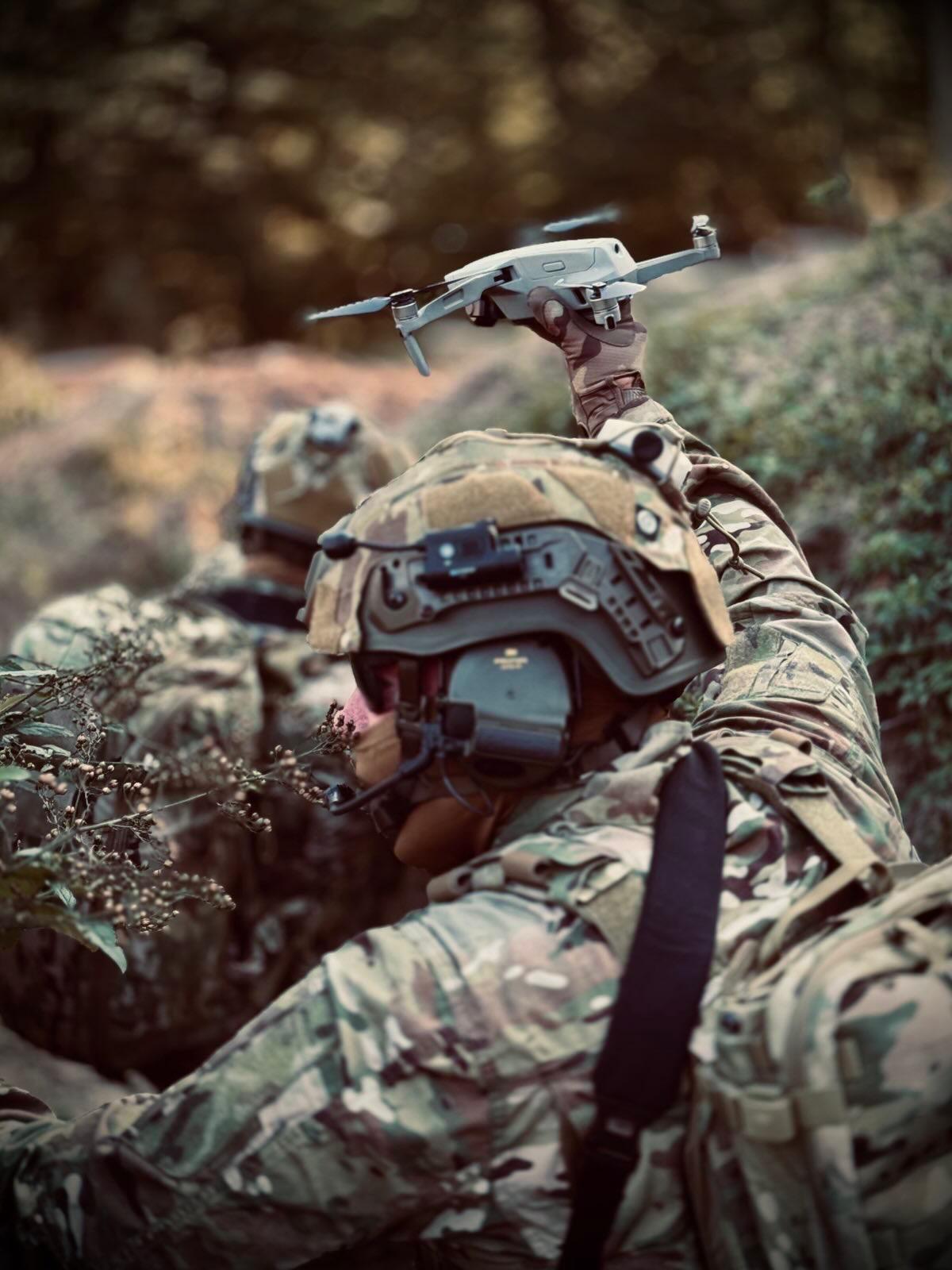
I went to a drone show not long ago, and everybody was hyped about some new type of drone that would take us about 40 minutes to set up — the ground station, the drone itself, the mission planning, deployment with payloads, and different types of drones that only work in specific cases.
From what I’ve seen, most of them won’t work.
Especially not in a war zone, where we need to deploy fast, and we know we’re being hunted by enemy drone teams.
Enemy UAVs are in constant motion.
We need to have a drone in the air in under five minutes.
We can’t risk being spotted by a high-altitude UAV while we’re standing there for an hour setting up our drone, completely exposed.
Yet a lot of governments are trying to add drones to their drone-warfare programs that simply won’t work in real combat.
My opinion comes from a strong stance, as I was an FPV pilot and am now an instructor.
They need to stop wasting money and start doing more training.
About chasing technology and well-trained operators
Thomas Lojek: So training is as essential as having the technology?
The Operator: Yes. I spoke with a European Special Forces instructor recently, and he said their FPV course is one month — sometimes weeks or even days.
In proper, reality-based training, during the first month the students barely touch an FPV drone.
They spend their time on simulators and learning how the drone actually works.
It takes training.
For example, a formation of 16 that gets divided into four-person teams needs at least two to four months to reach the drone-warfare standard that Ukraine has now.
And if possible, they need time in the field — a lot of time in the field.
Our honest opinion: governments need to train people instead of wasting money on new ideas that don’t work and that put pilots’ and soldiers’ lives at risk.
Right now, the most important asset on the battlefield — especially in Ukraine — is the drone pilot.
Everybody is chasing technology, but the key point is well-trained operators.
About AI in drones: The solution for everything?
Thomas Lojek: What about AI in drones?
The Operator: I’ve been using AI in combat zones.
There were incidents where I lost control because the AI simply took over the drone and we couldn’t switch it off.
Even though the AI switch itself was basic, I couldn’t disable it.
We almost had a friendly-fire incident.
The AI switched targets and entered target-lock mode.
I had to yell over the radios for people to move because the drone was uncontrollable.
The AI sent an explosive drone in the wrong direction.
This is dangerous on many levels — especially because the defense industry is selling the idea that AI is the solution for everything.
But from real combat zones, we’re seeing different results.
I am not denying that AI is an important asset — it is the future — but you still need a human operator to make it effective.
You need both sides.
The foundation that makes counter-drone measures effective
Thomas Lojek: Let’s say a German institution or governmental team — for example in close protection or counter-terrorism.
What do these guys really need right now to catch up in the drone game?
The Operator: They need to be able to identify drones.
They need to be able to read drone detectors.
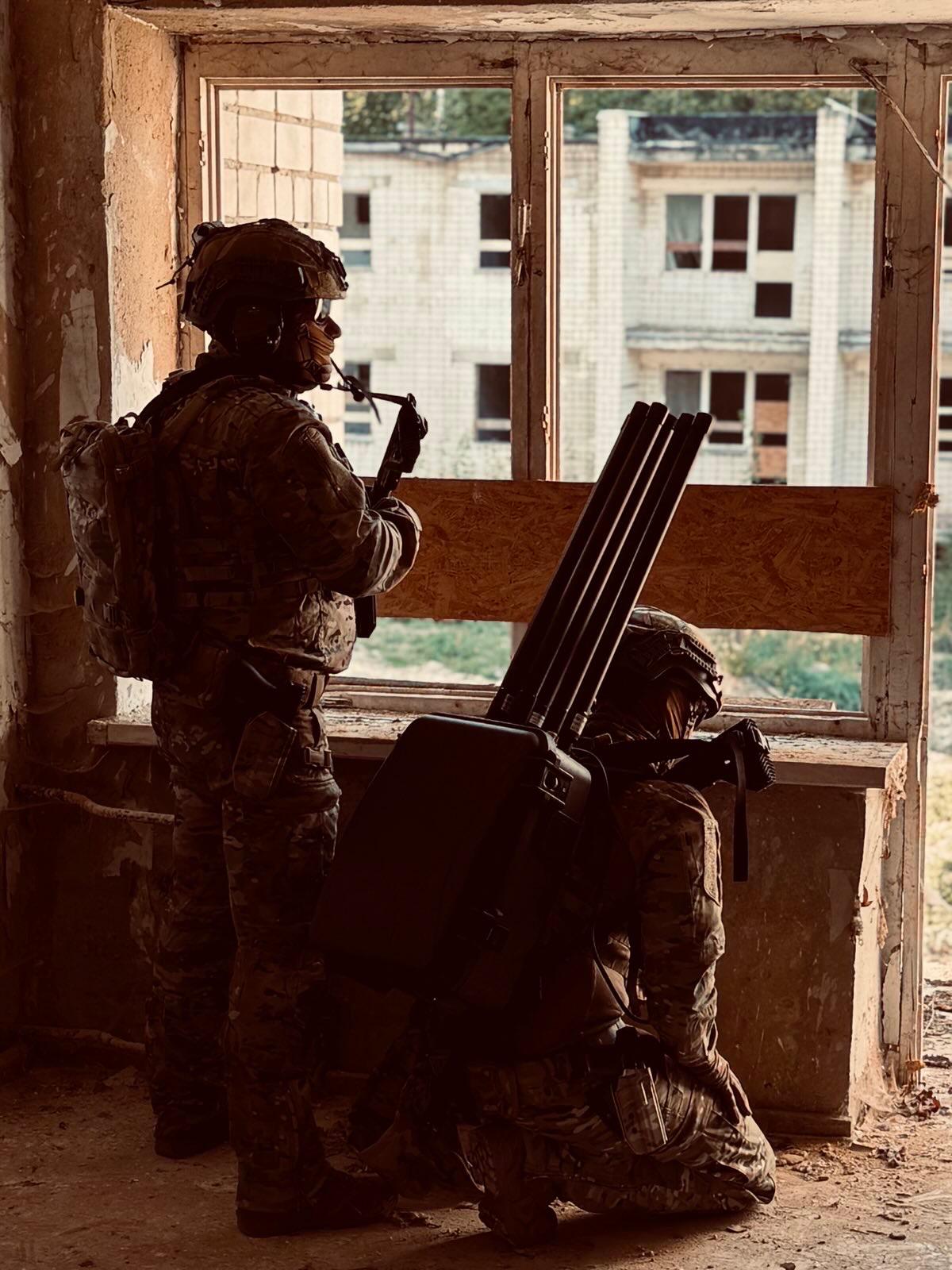
They need to learn how to use a spectrum analyzer — what frequencies are around them, how far they are, and, if they’re lucky, how to triangulate where the drone was launched from.
They need to learn how to use a jammer — that’s pretty basic — but they need to use it in a way that doesn’t affect the population around them.
They’ll have to use a drone gun if they can pinpoint or see the drone.
They cannot just activate the biggest jammer they have and think that’s it.
There are consequences: their own radios and comms can go down, cell signals in the area can drop, and antennas can burn out if they use a strong pulsing jammer.
In reality, counter-drone is pretty basic if you’ve dealt with drones before.
But you need training.
You need to be quick in deployment and able to adapt to dynamic situations.
It’s basic, but it’s also a challenge.
That’s why you train people instead of simply chasing technology.
Technology is your box of tools — but the operational capability and flexibility of your operators is the foundation that makes counter-drone measures effective.
You need to learn how to use the technology
Thomas Lojek: Can you explain that?
The Operator: The problem is this: if they don’t counter the drone in time, it gets difficult.
You need to activate the jammer before the drone has visual contact with you.
And for it to be fully effective — since signal travels in waves — you need to give it 20–30 seconds for the jammer to start affecting the drone.
It’s not always instant.
Your drone detector will pick up a drone 500 meters to 1 km away.
The moment it detects it, you need to have all jamming systems activated, not waste time.
So you need to learn how to use the technology — not just chase the latest and greatest.
A 5,000 USD jammer will work just like a 20,000 USD one, just on different scales.
Quality matters, of course.
But it’s your team that makes counter-drone measures effective and reliable.
Drones vs. Net Guns and Shotguns
Thomas Lojek: What are the other options besides jammers?
The Operator: Net guns. But they’re hard to get.
They’re basically like a fishing net that you shoot like a pistol round, and it expands in all directions.
Net guns are pretty hard to come by — even in Ukraine right now.
However, for UAVs the best counter is still jammers, as they’re effective up to around 100 m+.
Thomas Lojek: And shotguns? I hear a lot about shotguns for drone counter-measures. Is that a real thing?
The Operator: Yes. It’s one of the best tools.
You just destroy the drone when it comes close, roughly 70–150 m. But it’s a last-resort option.
A coordinated team to take out a drone
Thomas Lojek: Do you need a coordinated team to take out a drone with a shotgun, or can one operator do it?
The Operator: You need a coordinated team. That’s the most effective way.
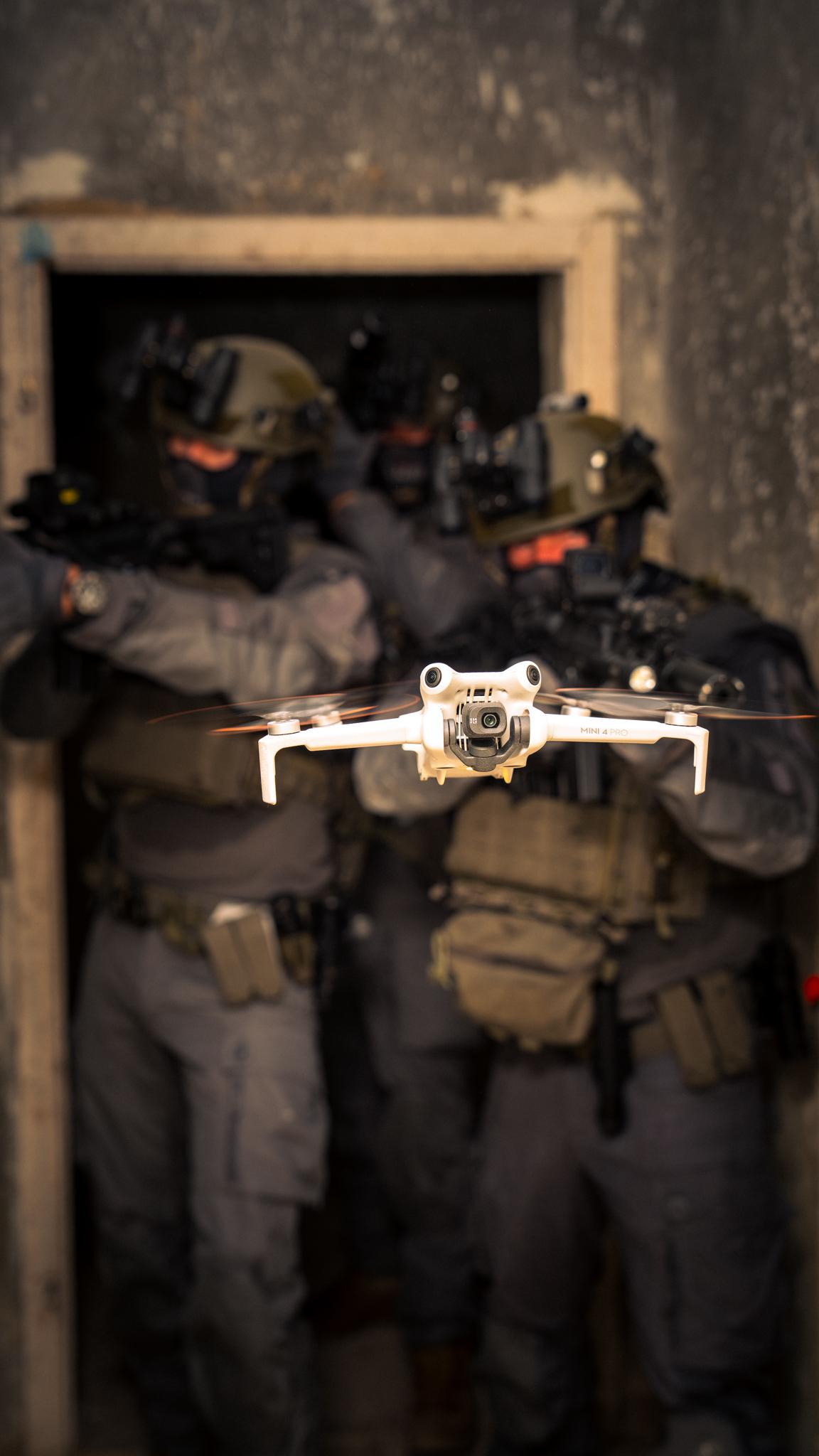
A good counter-drone team needs operators constantly monitoring the drone detector, operators ready with the jammers, and at least one or more operators with a shotgun.
And in urban areas, where civilians are close, it’s very difficult to use a shotgun.
It’s truly a last-resort measure.
If you don’t have a shotgun, you can use GPS spoofing systems.
That means the drone will lose control and drift toward the GPS spoofing antenna, causing the pilot to lose control.
Sometimes a pilot can recover the drone, but maybe only three times out of ten.
However, GPS spoofing is illegal, so it should be used only by government officials or units.
You need to be prepared — with deployment simulations, exfil plans, etc.
The population now has access to some of the best drones on the market, and it’s very easy to strap a grenade or a jar of something toxic to a drone and drop it on unsuspecting VIPs.
That’s why training matters — so you can protect your assets.
The art of excellence in drone warfare
Thomas Lojek: So, to sum it up: with your expertise, you can save governmental units and agencies a lot of budget, right?
Because you help them avoid spending on things they don’t need.
You show them how to stop overspending on technology and invest more in the team and in training?
The Operator: Yes. In some areas, especially when buying the right technology and equipment, you can save up to 40–50% without compromising the reliability or security of your counter-drone measures — if you know what you’re doing or buying.
I try to use the same tech I’ve used in Ukraine; I try to use only battle-proven tech and tools I know will do a good job.
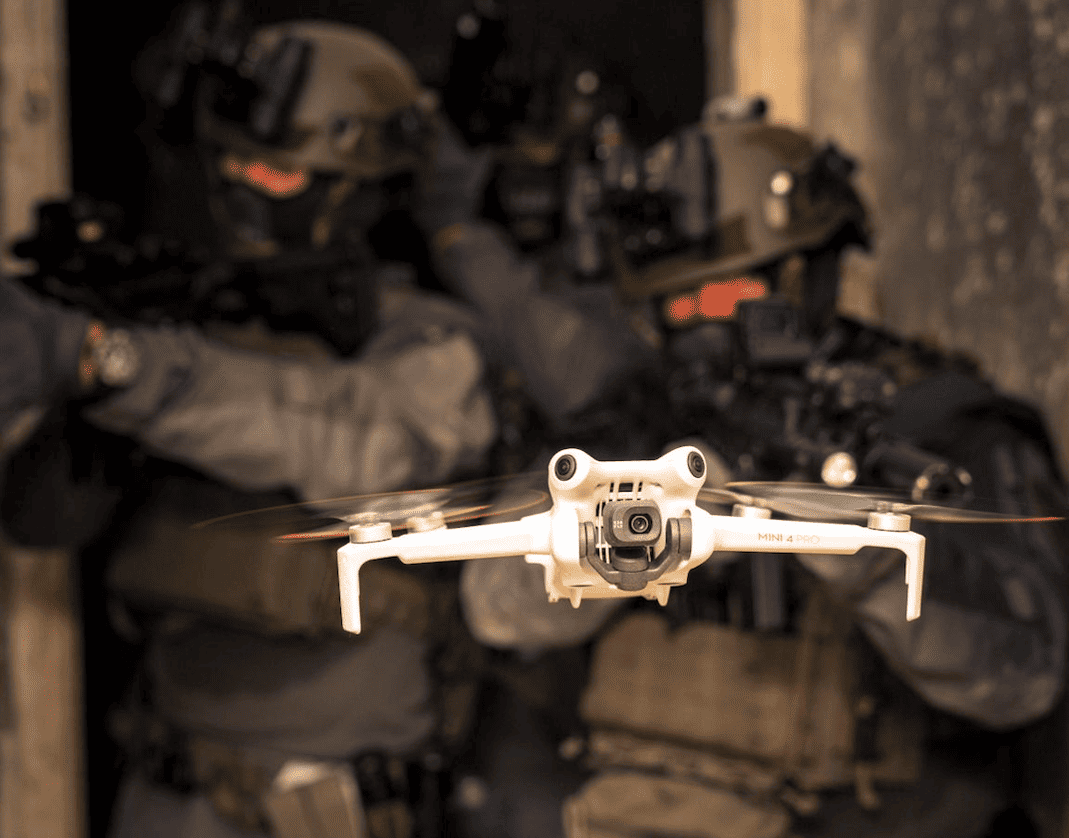
For example, DJI can pose a threat if you’re worried about OPSEC.
Don’t use DJI directly without modifications, because DJI has its own OS built in and can allegedly be used to spy.
But that mentality applies to Western drones too.
For that, there are workarounds.
A good drone operator removes the restrictions and disconnects the drone from the DJI system, so it’s no longer “DJI” — you’re left with the shell of a DJI drone running whatever you load onto it.
With that, you have an empty drone where the only connection is between you and the drone — no GPS, no satellites.
Most people don’t know it, but Ukraine uses its own DJI-based software that is safe.
However, we will transition to using other drone companies in the future for safety reasons.
We try to do our best to protect our soil and skies against foreign threats. To do that, we need training and resources — it’s our only bet.
The art of excellence in drone warfare is being highly flexible in what you use — and why.
Wodan International offers a comprehensive portfolio of trainings in drone countermeasures and operational readiness in drone warfare — exclusively for military and law enforcement agencies.
Additionally, Wodan International offers drone and counter-drone training for governmental close protection units — focusing on securing diplomatic travel parties, diplomatic personnel and embassies, VIPs, convoys, public-space operations, and reconnaissance/counter-reconnaissance.
Units can also choose optional tailor-made trainings, including Drones in CQB and mission preparation based on HEAT (Hostile Environment Awareness Training) principles.
Click to learn how these capabilities can strengthen your unit’s operational readiness: